
A few days ago, I visited a hotel in Dallas. entrance was beautiful, with indoor plants enhancing its beauty. I also noticed a unique feature: a display showing real-time air quality data from the hotel AQI sensors. this made my experience even more special. I never seen anything like this before. Then I realized that the plants were not only adding to the beauty but also acting as air purifiers. I’ve seen other things in different places, but in this post, I tell you how you can improve the air quality of a hotel lobbies.
Why Air Quality in Hotel Lobbies Matters
Hotel lobby is the first place guests enter. Before seeing their room or meeting the staff, the first thing guests notice is the air. People have become more concerned about their health these days, especially after COVID. Poor hotel lobby air quality can lead to breathing problems, headaches, allergies, fatigue, and discomfort, leading to guests feeling uneasy and receiving negative reviews. Therefore, improving air quality is crucial.
Good air quality has these benefits: Guests feel fresh and safe; the hotel image improves, as I shared my experience, and the staff performs better. Google Reviews and bookings increase.
Also Read: Best Air Quality Management Solutions for Hospitality Industry (2026 Guide)
Key Pollutants Found in Hotel Lobbies
There are 4 main reasons why the air in a hotel lobby is bad:
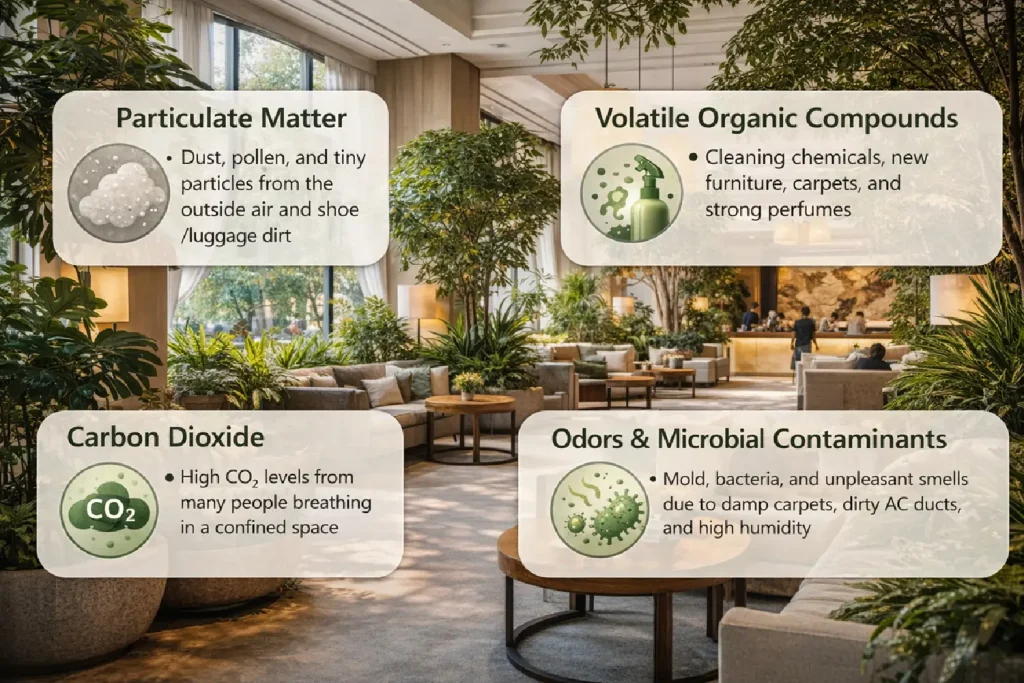
Particulate Matter
Now you might be concern .what is this Particulate Matter, so let me tell you that these are very small dust particles which cannot be seen with the eyes, but go inside with the breath. these particles enter the hotel lobby via road dust and the shoes and luggage of guests arriving from outside. The problem with this is that sometimes it can cause allergies and breathing problems. due to which the guest does not feel fresh in the hotel.
Volatile Organic Compounds
These are chemicals that slowly linger in the air. Where do these chemicals come from in the hotel? When cleaning is done in the hotel, sometimes strong cleaning liquids are used, and when new carpets, sofas, furniture are brought to the hotel, chemicals slowly come out from them and those chemicals spoil the air quality of the hotel. have you ever been to a hotel where the lobby smells strongly of perfume or chemicals? That’s due to volatile organic compounds.
Carbon Dioxide
When too many people breathe in one place and there is less fresh air, CO₂ levels increase. This is most common in the lobby area, especially when many guests check in or out at the same time, or when there is a hotel event.
Odors & Microbial Contaminants
Odors and microbial contaminants in hotel lobbies refer to the spread of bad smells and germs in the air. this problem occurs in highly humid areas where AC ducts are not cleaned properly, moisture accumulates, or indoor plants are over-watered. this causes mold, bacteria, food smells and damp smells to develop, which makes the lobby feel musty and unhygienic. such air creates a negative impression in the minds of guests.
How to Improve Air Quality in Hotel Lobbies
how you can improve the air quality of your hotel lobby by doing these small things.
Upgrade HVAC Systems
HVAC system is the AC system of the hotel lobby, which circulates the air, filters it and brings in fresh air from outside. If the HVAC is good then the air in the lobby remains clean and fresh. good quality filters are installed in it which trap dust, smoke and small particles containing allergens. Instead of just circulating the stale air, some fresh air should come in from outside, otherwise the lobby feels stuffy. If the AC and its pipes are not cleaned from time to time then bad smell and germs are produced. when hotels improve their HVAC system, bad smell reduces and guests feel more comfortable in the lobby.
Install Commercial Air Purifiers
Installing a commercial air purifier in a hotel lobby is essential because a lot of people come and go in the lobby, bringing with them dust, smoke, odors, and germs. an AC only cools the air, but it doesn’t clean air. an air purifier filters the air and removes impurities, leaving the lobby fresh, clean, and breathable. when the air is clean, guests don’t experience problems like cough, allergies, or bad odors, and they find the hotel more clean and professional. Therefore, installing an air purifier is crucial for a good guest experience.
Improve Ventilation Strategy
some hotels use commercial air purifiers and advanced HVAC systems (which filter the air and circulate fresh air), which instantly remove dust, germs, and chemical particles from the air, providing guests with a clean environment. but not every hotel has that kind of budget. even those with a limited budget can improve air quality through simple methods like keeping lobby doors and windows slightly open when possible, regular cleaning and dusting, frequently cleaning AC filters, and promoting natural ventilation. this reduces air pollution and makes the lobby feel fresher without much expense. these small things make guests feel comfortable and enhance their lobby experience.
Use Low‑VOC Materials & Cleaning Products
Using strong cleaning chemicals, paint, and air fresheners in a hotel lobby can pollute the air, causing a chemical smell that can cause headaches or irritation. Therefore, it’s important to use low-VOC materials and cleaning products, as these release fewer harmful gases into the air. Eco-friendly, mild cleaners can keep the lobby clean and odor-free.
Add Indoor Plants
Adding Indoor plants to a hotel lobby can purify the air to some extent, but they aren’t as effective as HVAC or commercial air purifiers. however, you can add plants to enhance the hotel lobby’s appearance and purify the air. some plants I recommend include areca palm, peace lily, and snake plant.
Control Humidity Levels
Humidity control is crucial in a hotel lobby because both too much and too little humidity can create problems. If the humidity becomes too high, the lobby can smell damp, mold can grow on walls and furniture, and the air can feel stuffy. In this situation, guests may feel the place is not clean, even if it has been cleaned.
on the other hand, if the humidity becomes too low, the lobby air becomes dry, which can cause skin dryness, throat irritation, and burning eyes for guests. therefore, the ideal humidity should be maintained between 40% and 60%. those who do not have large HVAC systems or expensive equipment can control humidity to a great extent by taking simple steps like regular ventilation, fixing water leaks immediately, and avoiding over-watering indoor plants. right humidity makes the lobby feel fresh, comfortable, and healthy, which naturally improves the guest experience.
Manage Entryway Pollution
Without a proper system at the hotel entry, this dust spreads throughout the lobby, making the air heavy and quickly soiling the furniture. prevents guests from leaving the lobby feeling clean and fresh. to mitigate this problem, installing high-quality mats outside and inside the entry gate is very effective, preventing dust from entering.
How Better Air Quality Improves Guest Experience
- Comfort & Relaxation: when hotel lobby air is clean and fresh, guests instantly feel better. clean air reduces fatigue, headaches, and stress, making guests more relaxed when checking in or waiting. Fresh air prevents the lobby from feeling stuffy or stuffy, and guests can sit comfortably without discomfort.
- Perceived Cleanliness: The biggest benefit of good air quality is that the lobby appears cleaner and more premium, even without any visible changes. When the air is free of odors, chemical smells, or dampness, guests perceive their hotel as hygienic and well-maintained. Fresh air sends a silent signal that the hotel takes professionalism and guest safety seriously.
- Better Reviews & Brand Trust: Guests don’t often give direct compliments on clean air, but they do complain if the air quality is bad. Poor air quality can lead to negative reviews, low ratings, and damage to brand image. When hotel lobby air quality improves, complaints decrease and guest trust increases, which improves the hotel’s reputation and ratings in the long term.
How to Communicate Air Quality Improvements to Guests
The real impact of good air quality in a hotel lobby is felt when guests can clearly feel it. To achieve this, a digital display or screen can be installed in the lobby, displaying the real-time AQI or air quality status in simple language, such as “Air Quality Today: Good” or “Fresh & Clean Air Inside.” When guests see this information at the reception or waiting area, they gain confidence that the hotel takes their health and comfort seriously.
Hotel website and booking pages should also include a brief and clear mention of air quality efforts. air purification, ventilation, and monitoring could be mentioned in the Health & Safety or Guest Comfort sections. This gives guests a sense of trust before booking, and when online messages and lobby experiences match, the hotel’s clean air quality naturally leaves a strong impression.
Conclusion
To improve air quality in hotel lobbies is to invest directly in guest satisfaction, brand reputation, and long‑term operational success. so, we hope you enjoyed this blog post.
FAQ
Q1. Does just running the AC clean the air?
No, AC only cools the air.
Q2. How does poor air quality affect guests?
Bad air can make guests feel suffocated, smelly, tired, and uncomfortable, which can spoil the first impression of the hotel.
Q3. Is it beneficial to display the AQI on a digital display?
Yes, displaying AQI or “Good Air Quality” provides reassurance to guests.

My name is Jugraj Singh, the founder and author of Evergreenguides. I share practical tips and real-life insights on indoor and outdoor gardening, plant care, and improving home air quality, helping readers create greener and healthier living spaces.