
Lavender is a plant that grows well even with minimal care, but it’s important to understand its proper care. The mistake most people make is watering it frequently and fertilizing it excessively like other plants, which ultimately damages the plant.
If you want your lavender plant to remain healthy and bloom profusely in your garden for years, you need to understand its natural needs. If you bring a plant from the nursery but it dies within a few days, then you’re not sure if you Soil and Drainage Careplanted it correctly. So, first, check out our guide on how to plant lavender, because planting the right plant is the foundation for good growth.
Understanding Lavender’s Nature
Lavender is native to the Mediterranean region, where the climate is dry and sunny. This is why it doesn’t like excessive watering, heavy soil, or excessive fertilizer.
This plant grows best when:
It receives approximately 7 to 8 hours of sunlight throughout the day
The soil is not stagnant
Care is minimal but appropriate
If you’ve already followed this guide on how to grow lavender plants, caring for it becomes even easier.
Sunlight Requirements
When I first brought this plant home from the nursery, I kept it indoors, and it died within the first week. I went back to the nursery to get it back and told him my plant didn’t last even a week. He told me it needed 7 to 8 hours of direct sunlight. I understood what went wrong. Let’s get back to it. Lavender needs at least 7 to 8 hours of direct sunlight daily for good growth. If it doesn’t get enough sunlight, the plant becomes weak and blooms less.
If you’re growing it indoors, keep it in a place that receives direct sunlight, such as near a window. For outdoor cultivation, an open, sunny area is best.
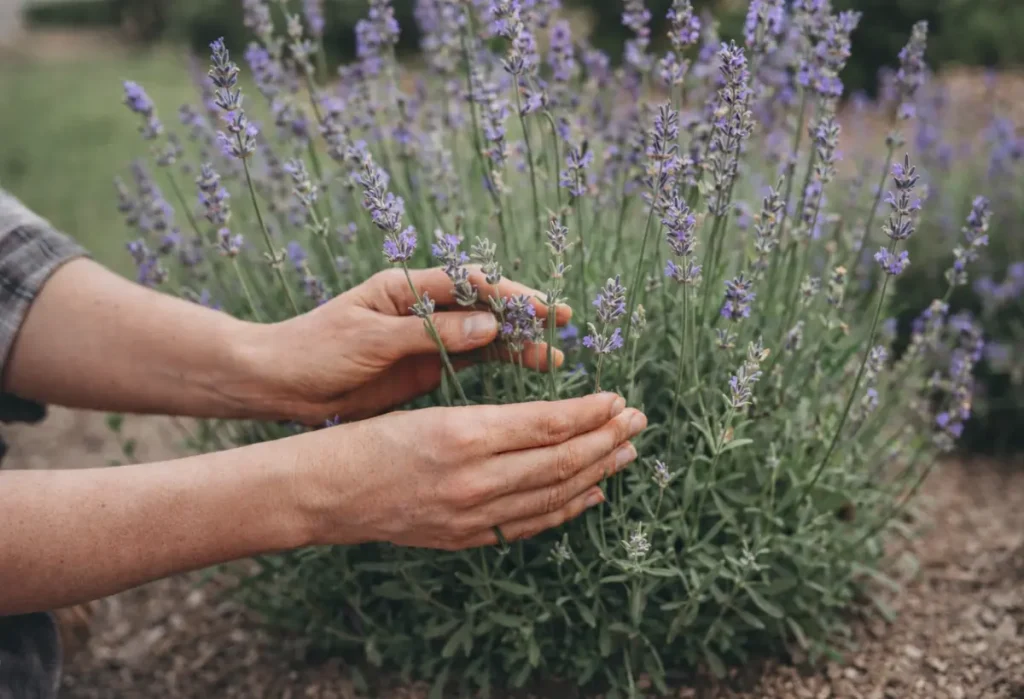
Watering Lavender the Right Way
The most common and serious mistake when caring for lavender is watering. Many people, especially new gardeners, assume that lavender, like all other plants, needs regular and abundant watering, when in fact, the plant thrives best in dry, mild conditions. Its natural makeup allows it to survive well with limited water, so watering it frequently is not beneficial, but rather detrimental.
Initially, when a new plant is planted, it is necessary to provide light and balanced watering to strengthen its roots. Spray water on its leaves once or twice a day for three days after planting. This will prevent the plant from dying. Watering should not be stopped completely at this time, but should be given just enough to keep the soil slightly moist and allow the roots to spread properly. However, as the plant grows and becomes established, its water needs gradually decrease, and this is where proper understanding of when to water and when not to water comes into play.
The most important thing during this time is to carefully monitor the soil conditions and water accordingly. Always water only when the soil is completely dry, as constantly wet soil can cause root rot, which gradually destroys the entire plant. Therefore, the key to proper lavender care is to water sparingly, at the right time, to ensure a healthy, strong, and long-lived plant.
Soil and Drainage Care
Soil and its drainage play a crucial role in the healthy growth of lavender, as the plant thrives in conditions that don’t allow for stagnant water. If the soil is heavy or clayey and remains waterlogged for extended periods, the roots don’t get enough air, and rot sets in, weakening and causing the entire plant to die. Therefore, it’s important to ensure that the soil is light, crumbly, and drains water quickly from the outset.
If your garden soil is heavy or water-retentive, it’s crucial to amend it. You can improve the soil’s structure by adding sand, small stones, or gravel, allowing water to drain easily and preventing moisture from accumulating around the roots. This type of soil is ideal for lavender, as it protects the roots while still allowing them enough room to breathe, promoting rapid and healthy growth.
Pruning and Maintenance
Periodic pruning is essential for maintaining the proper growth and beauty of the lavender plant. If left unpruned, the branches gradually become woody, preventing new growth. This not only ruins the plant’s shape but also reduces the number of flowers. Therefore, pruning should be considered essential maintenance for the plant’s health, not just for decoration.
The best time to prune is usually after flowering, For a complete step-by-step pruning method, read our guide on how to prune lavender plants. when the plant is ready to focus its energy on new growth. Lightly trimming the plant during this time encourages new branches to emerge, making the plant denser and more attractive. It’s important to be careful not to cut too far into the woody portion (the hard part at the bottom) when trimming, as this is where new growth is difficult to achieve. Proper pruning also increases the plant’s lifespan and promotes better flowering each season.
Fertilizing Lavender Plants
Lavender does not require much fertilizer. In fact, too much fertilizer can reduce flowering and weaken the plant’s natural structure.
If your soil is good, you may not need to fertilize. In poor soil conditions, a light application of balanced fertilizer once during the growing season is sufficient.
The goal is to avoid overfertilizing and allow the plant to grow naturally, I don’t fertilize my lavender plants at all.
Seasonal Care Tips
Lavender care varies slightly in each season.
- You should avoid overwatering your lavender in the summer.
- Maintain proper soil drainage during the rainy season.
- You can lightly cover the plant in the winter to protect it from the cold.
Common mistakes
So far we have covered all the important aspects of lavender care in detail, but it is worthwhile to recap it in a simpler and shorter form.
- Overwatering
- Lack of sunlight
- Heavy and wet soil
- Overfertilizing
If you take care of these small but important things, your lavender plant will remain healthy, lush, and fragrant for a long time. Proper care doesn’t mean a lot of effort, but rather a combination of simple but effective attention with the right understanding.
Indoor vs Outdoor Care
Lavender can be grown both indoors and outdoors, but care requirements differ slightly. Indoor lavender requires maximum sunlight and proper ventilation. Outdoor lavender benefits from natural conditions but needs protection from extreme weather.
In both cases, the key considerations remain the same: sunlight, adequate water flow, and controlled watering.
For a more detailed, step-by-step guide on proper watering, sunlight, soil mix, and pruning methods, you can also read this complete guide on caring for lavender in containers: https://evergreenguides.com/how-to-care-for-lavender-plants-in-pots/
Conclusion
Caring for lavender isn’t difficult, just a matter of understanding its needs. Moderate watering, abundant sunlight, and well-drained soil are the key to healthy and robust growth. If you start off right, further care becomes easier, so be sure to consult your how to plant lavender for best results.
FAQs
Should lavender be watered daily?
No, lavender doesn’t need to be watered daily. Water only when the soil is dry.
How much sunlight does lavender need?
It needs 6–8 hours of direct sunlight daily.
Can lavender grow in a pot?
Yes, it can be grown in a pot with good drainage.
When does lavender bloom?
Flowers usually bloom from late spring to early summer.
Does lavender grow back every year?
Yes, it is a perennial plant and will grow back every year with proper care.

My name is Jugraj Singh, the founder and author of Evergreenguides. I share practical tips and real-life insights on indoor and outdoor gardening, plant care, and improving home air quality, helping readers create greener and healthier living spaces.