
Pruning lavender plants is one of the most important steps to keep them healthy, bushy, and full of flowers year after year. Many gardeners ignore pruning or do it incorrectly, which leads to woody stems, poor flowering, and eventually a dying plant.
If you want your lavender plant to stay fragrant, and productive, you need to follow a proper pruning routine based on how lavender naturally grows. Please read this blog post till the end.
Before you begin pruning, it’s important to ensure your plant is properly planted. If you’re unsure, consult our complete guide on how to plant lavender, as good growth always starts with proper planting.
Understanding How Lavender Grows
Lavender plants grow a little differently than other plants. The upper part has soft green stems, from which new branches and flowers emerge, while the lower part gradually becomes harder and woodier. Therefore, periodic pruning is necessary.
The most important rule when pruning is to always cut only the soft green part and avoid touching the woody part at all.
If you accidentally cut too deep and reach the woody part, new growth may stop from there. This is why it’s crucial to understand the plant’s structure thoroughly before pruning. And only the soft green part should be cut.
If your plant has been growing well following the methods from your guide on how to grow lavender plants and how to care for lavender plant, pruning becomes much easier and more effective.
Why Pruning Lavender is Important
Pruning isn’t just for shaping the plant, it also directly impacts its growth and flowering.
When you prune lavender correctly, new branches will sprout from the sides of the plant, making it denser and more compact. It also prevents the plant from becoming woody and leggy, a common problem with unpruned lavender.
Regular pruning improves air circulation within the plant, reducing the risk of disease and promoting more flowers during the flowering season.
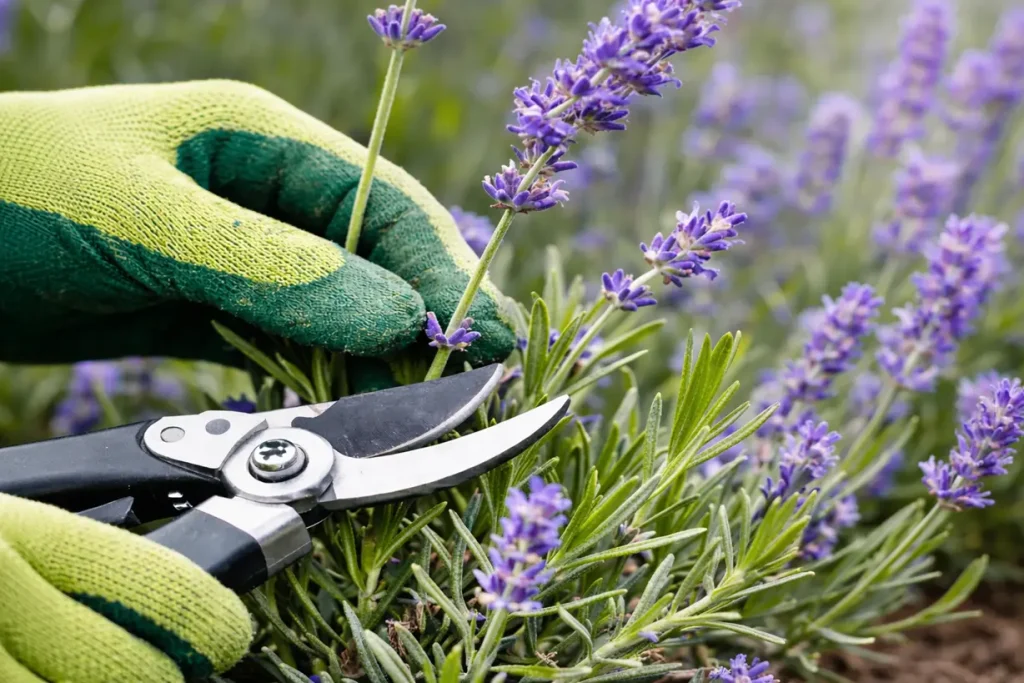
Best Time to Prune Lavender
Choosing the right time to prune a lavender plant is crucial, as it directly impacts the plant’s growth and the number of flowers the following season. Experienced gardeners agree that pruning at the wrong time can weaken the plant, while pruning at the right time can make it stronger and denser.
Lavender is usually pruned for the first time after the main flowering period ends, usually in late spring or early summer. Light pruning at this time prepares the plant for new branches and encourages further growth.
After this, a light pruning can be done in late summer, when the second flowering period ends. This helps maintain the plant’s shape and encourages new branches to grow, making it denser and healthier.
The most important thing to remember is to avoid heavy pruning in late fall or winter. During this time, the plant’s growth slows down and it doesn’t have enough time to recover after harvesting, increasing the risk of damage.
Therefore, if you want a healthy and flowering lavender plant for a long time, always prune according to its natural growth cycle.
Step-by-Step Lavender Pruning Method
Before you begin harvesting lavender, it’s important to examine the plant carefully. Experienced gardeners first distinguish between the soft green parts of the plant and the woody, hard parts underneath. The goal of pruning is to promote healthy growth without damaging the plant’s root structure. and if you’re new to it, this can be challenging.
First, remove spent flower stems. Always harvest from a cutting that has healthy leaves underneath. This technique encourages new branches to emerge from the same area, allowing the plant to fill in faster.
Next, trim the outer part of the plant in a balanced manner to maintain a rounded and uniform shape. This method not only looks good, but also allows sunlight to reach every part of the plant and promotes even growth.
Remember not to prune more than one-third of the plant at a time. Excessive pruning stresses the plant and slows its recovery. Even professional gardeners prefer light and controlled pruning.
How to Make Lavender Bushier
If your goal is to keep your lavender plant dense, compact, and attractive, regular and proper pruning is crucial. I believe that dense lavender growth is achieved not by a single pruning, but by consistent, proper maintenance.
Whenever you lightly trim the tips of the plant, the plant focuses its energy on creating new side branches. This process gradually expands the plant’s width and makes it denser and more balanced. This is why professional growers always prefer regular light pruning, rather than cutting off large amounts at once. and if your plant is new, you should avoid pruning for at least 8 to 10 months.
Additionally, maintaining proper plant spacing is equally important. If lavender plants are planted too close together, they compete for sunlight and air. This affects their growth and can result in a thin and weak plant.
For best results, always ensure each plant receives adequate sunlight, air, and space. When pruning and proper spacing are balanced, lavender plants naturally grow denser, healthier, and longer-lasting.
Common Pruning Mistakes to Avoid
There are some common mistakes when pruning lavender plants that can seriously impact the plant’s growth. In my experience, you should always avoid these mistakes, as even a small mistake can cause long-term damage to the plant.
The biggest mistake is cutting down to the woody part of the plant. This part is not suitable for new growth, and if cut off, it becomes difficult for new branches to emerge from there. In many cases, this can stop the plant’s growth completely.
Another common mistake is completely neglecting pruning. Many people think lavender doesn’t need pruning, but without regular trimming, the plant becomes leggy, unbalanced, and weak. This not only ruins its appearance but also reduces the number of flowers. I made the same mistake, but don’t try it.
Additionally, using dull or dirty tools is also detrimental. Instead of cutting the stems cleanly, such tools damage them, increasing the risk of infection and disease. Therefore, it is always best to use clean and sharp tools.
Another crucial mistake is pruning too much at once. Experienced gardeners know that lavender should be pruned gradually and in limited amounts. Removing too much at once can stress the plant, slowing its growth and reducing flowering.
If you have any question, you can ask in the comment section.
What Happens After Pruning
Properly pruning a lavender plant will show visible results within a few weeks. The first time I pruned my lavender plant, I noticed side branches emerging after two weeks. After pruning, the plant focuses its energy on developing new shoots, gradually becoming denser and more balanced.
Within the first 2–3 weeks, you’ll also notice new, tender branches sprouting from the cut site. This indicates that the pruning was done correctly and the plant is responding healthily. Over time, these new branches will strengthen and fill out the entire plant, improving both its shape and density.
A major benefit of proper pruning is that the plant produces more flowers the next flowering season than before. This is because pruning encourages new growth, which eventually turns into flowers.
Maintaining proper care of the plant after pruning is crucial, as this is when new growth develops most rapidly. If the plant receives adequate sunlight during this time, it recovers better and grows denser and healthier. Therefore, it’s crucial to follow a proper post-pruning care routine, which you can learn in detail in our complete guide on how to care for lavender plants.
Conclusion
Pruning lavender can seem a bit daunting at first, but once you get the hang of it, it’s a simple process. Simply prune regularly, avoiding the woody parts, and following the plant’s natural growth.
If you combine proper pruning with proper planting and care, your lavender plant will remain healthy, fragrant, and full of flowers for a long time. For best results, check out our complete guide to how to plant lavender.
FAQs
How often should I prune lavender?
You should prune lavender 1–2 times a year, usually after flowering.
Can I cut lavender back hard?
No, avoid cutting into the woody part. Only trim the soft green growth.
What happens if I don’t prune lavender?
The plant becomes woody, leggy, and produces fewer flowers over time.
When is the best time to prune lavender?
After the main flowering in late spring or early summer.
How much of the plant should I cut?
Do not remove more than one-third of the plant at once.
Can pruning make lavender bushier?
Yes, regular pruning encourages side growth and makes the plant fuller.

My name is Jugraj Singh, the founder and author of Evergreenguides. I share practical tips and real-life insights on indoor and outdoor gardening, plant care, and improving home air quality, helping readers create greener and healthier living spaces.