Growing a lavender plant in your home garden isn’t difficult, but understanding its natural needs is essential for proper cultivation. It’s a Mediterranean plant, which means it grows best in dry, sunny, and well-drained soil. If you meet these basic needs, lavender makes for a very low-maintenance and long-term plant.
Whether you’re starting from seeds, buying a nursery plant, or growing from cuttings, this guide will take you through the entire process step by step.
Understanding Lavender Growth Basics
When I first started gardening, I didn’t know much about lavender. I treated it like any other plant, and that was my biggest mistake. I watered it daily, thinking that more water would help the plant grow faster. Furthermore, I didn’t understand soil well, and I planted it in heavy clay soil.
But within a few days, my lavender plant gradually weakened and eventually died completely. At the time, I didn’t understand what was going wrong, but later, through research and practical experience, I discovered that lavender plant behaves quite differently from other plants.
In fact, lavender is a plant that thrives with minimal care. It doesn’t require frequent watering, and stagnant soil can cause root rot. Similarly, overly rich soil is not ideal for lavender, as it can hinder its natural growth and flowering.
When I corrected my mistakes and provided the right conditions — such as well-draining soil, plenty of sunlight, and limited watering — my lavender plants began to grow healthily.
If you’re just starting out, getting the planting right is crucial, as this lays the foundation for its long-term growth. Be sure to check out our detailed guide, “How to Plant Lavender.“
Choosing the Right Location
Initially, I didn’t take the importance of location seriously. I planted my first lavender plant in a spot that only received 2-3 hours of sunlight a day. At the time, I thought that would be enough sunlight, but gradually, I began to notice the difference.
The plant was growing tall, but it was very weak and wasn’t producing any flowers. It seemed as if it was just surviving, not growing. Then I noticed it and realized my mistake.
When I moved the same plant to a location where it received at least 6–8 hours of direct sunlight throughout the day, its growth completely changed within a few weeks. The plant grew stronger, its branches grew thicker, and it gradually began to bloom.
This is where I realized that sunlight isn’t optional for lavender, but rather the most important factor in its growth. If it doesn’t receive the proper amount of sunlight, all other care is wasted.
If you’re growing it indoors, try to place it near a window that receives good sunlight throughout the day. Also, keep airflow in mind, as lavender doesn’t perform well in humid, enclosed spaces.
Soil Requirements for Healthy Growth
Initially, I planted my lavender in normal garden soil. The soil was a bit heavy and didn’t drain quickly. At the time, I thought the plant would grow faster in soil with more nutrients, but within a few days, the plant’s condition began to deteriorate and its growth stopped.
Later, I realized that the most important thing for lavender isn’t rich soil, but proper drainage. If water stagnates in the soil, the roots gradually rot, and the plant can’t survive.
When I changed my soil mix, I saw a real difference. Now, I use about 50–60% normal garden soil, 20–30% sand, and 10–20% gravel or perlite. This type of soil prevents water stagnation and provides air to the roots, which helps the plant grow healthily.
Another mistake I made in the past was adding too much compost. This makes the plant look green, but results in fewer flowers. So, now I limit compost use, or sometimes avoid it altogether.
If your soil is clay-type or tends to retain water, don’t use it directly. It’s important to make it lighter by adding sand and gravel to ensure lavender will grow properly.
Watering Lavender the Right Way
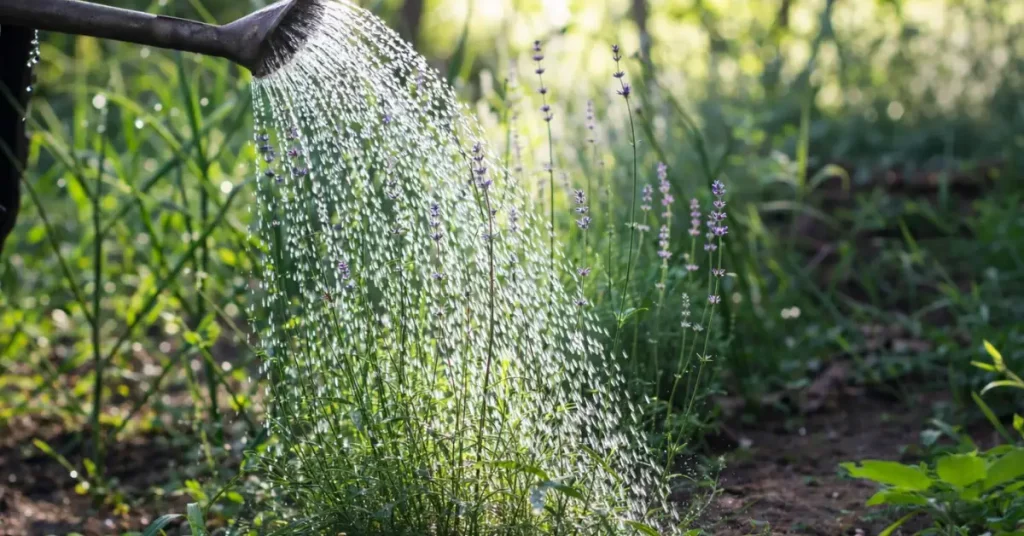
Watering lavender is a bit prudent, as it’s not a plant that needs daily watering. If watered too often, its roots can start to rot and the plant can slowly die.
Initially, when the plant is new, light watering is necessary to allow the roots to establish properly. However, as the plant matures, watering should be reduced. The best practice is to water only when the soil feels completely dry.
If you’re growing lavender in a pot, pay special attention to drainage. The pot must have holes in the bottom to allow excess water to drain out. If water stagnates, the roots can quickly rot.
Remember a simple rule—it’s safer to underwater lavender than to overwater it.
How to Grow Lavender Faster and Healthier
If you want your lavender plant to grow quickly and densely, you need to pay attention to spacing, pruning, and sunlight.
Spread each plant sufficiently so that air can circulate freely. Planting them too close together weakens the plants and increases the risk of disease.
Pruning is also very important. Light trimming after flowering encourages new shoots and makes the plant bushier. If you want to learn more about pruning, you can link to our other article, “How to Prune Lavender Plants.“
Fertilizing Lavender (Do You Even Need It?)
Lavender is a plant that doesn’t require much fertilizer. It naturally grows well even in soil that lacks a lot of nutrients.
I haven’t used fertilizer on my lavender plants, yet they have grown healthily and flowered well. This suggests that this plant doesn’t need much feeding; rather, it performs better under simple conditions.
If the soil is very poor, a light organic feed can be given once a year, but in most cases, even this isn’t necessary. Overfertilizing will make the plant look greener, but will result in fewer flowers. so, it’s better to let it grow naturally and avoid unnecessary fertilizers.
Growth Timeline of Lavender Plants
If you’re growing it from seeds, you’ll need to be patient at first. Seeds take some time to germinate, and then it can take a few months for the plant to properly establish itself. Growth may appear slow during this time, but this is completely normal.
On the other hand, if you start with nursery plants or cuttings, growth appears much faster. These plants are already developed, so they should start increasing in size and become stable within a few weeks.
Common Problems While Growing Lavender
- Overwatering (The Biggest Mistake): If you water lavender too often, the soil remains soggy and the roots begin to rot (root rot).
- Inadequate Sunlight: If the plant doesn’t get enough sunlight (6–8 hours), it becomes tall and weak and doesn’t flower.
- Using Heavy Soil: If the soil is too heavy (clay type), water stagnates and the roots suffer.
- Poor Drainage: If the pot or soil doesn’t have a proper drainage system, excess water accumulates.
- High Humidity (Indoor Problem): Lavender does not perform well in high indoor humidity and can cause fungal issues.
Growing Lavender in Pots vs Ground
You can grow lavender both in the ground and in a pot. However, growing it in a pot gives you more control over soil and drainage.
If growing it in a pot, ensure it has drainage holes and use a sandy soil mix. Terracotta pots are best for this purpose.
FAQs
Q1. Is lavender easy to grow?
Yes, it grows easily if it has adequate sunlight and good drainage.
Q2. How much sunlight does lavender need?
At least 6–8 hours of direct sunlight is necessary.
Q3. How often should it be watered?
Water only when the soil is completely dry.
Q4. Can it be grown in a pot?
Yes, the pot must have drainage holes.
Q5. Is fertilizer necessary?
No, it grows well without fertilizer.
Conclusion
In today’s post, we learned that growing lavender properly doesn’t require much effort, but rather understanding. Adequate sunlight, good drainage, and limited watering—these are the basics that determine its healthy growth.
Mistakes are normal in the beginning, but as you understand the plant, results improve. With the right methods, it’s clear that lavender is a low-maintenance and long-lasting plant.
If you haven’t yet mastered the proper planting, be sure to check out our detailed guide “How to Plant Lavender,” as this forms the foundation for its strong growth.

My name is Jugraj Singh, the founder and author of Evergreenguides. I share practical tips and real-life insights on indoor and outdoor gardening, plant care, and improving home air quality, helping readers create greener and healthier living spaces.