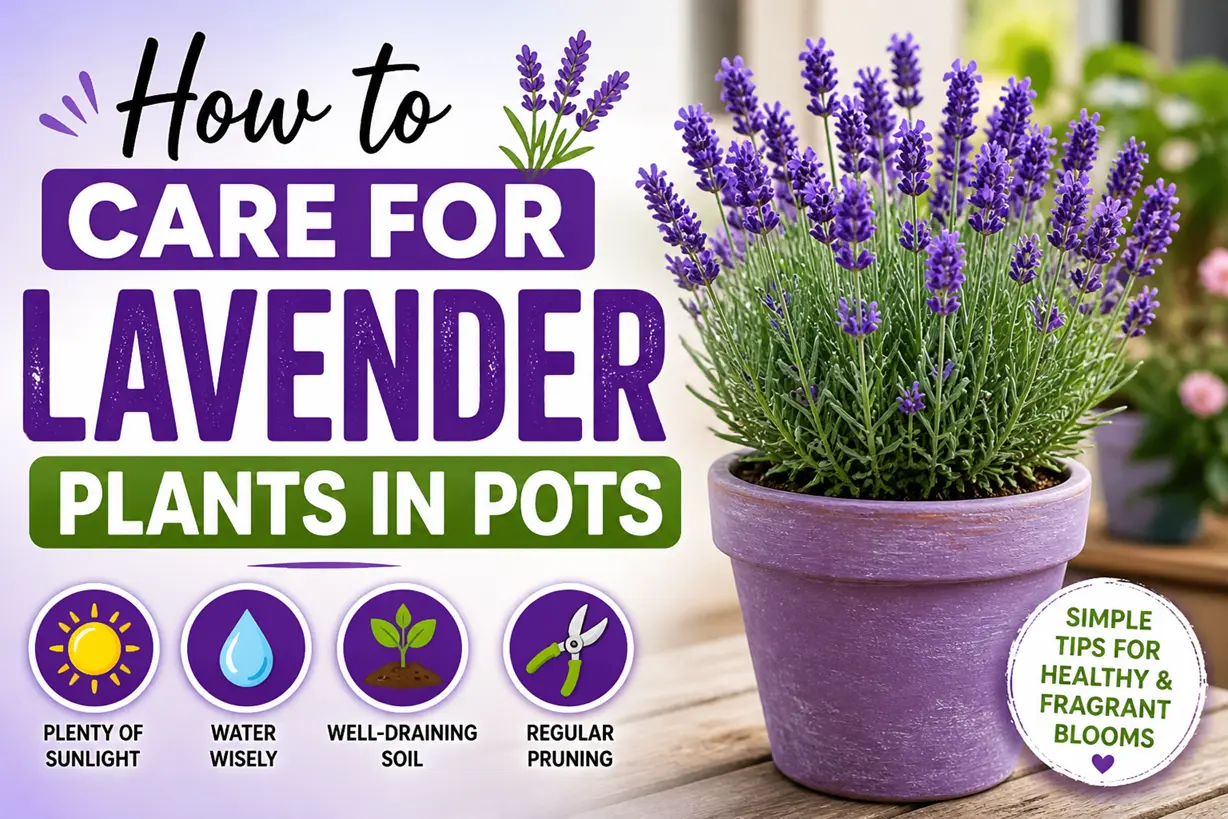
Lavender is one of the most beautiful and fragrant plants you can grow at home. The best part? Even if you don’t have a garden, growing lavender in pots is easy, space-saving, and perfect for balconies, terraces, or indoors.
I’ve already put together a complete guide on lavender care for you on our website, and in this guide today, you’ll learn everything about caring for lavender plants in pots—from watering and sunlight to pruning and avoiding common mistakes.
Choosing the Right Pot for Lavender
As you may have read in our blog post about lavender, lavender roots don’t like being in water, so the pot you choose matters a lot.
Best pot tips:
- Use terracotta or clay pots (they absorb more moisture)
- Be sure to have drainage holes at the bottom
- Terracotta pot minimum size: 10–12 inches deep
- Avoid plastic pots if overwatering is common
Bigger pots = healthier roots = more flowering
Sunlight Requirements (Most Important)
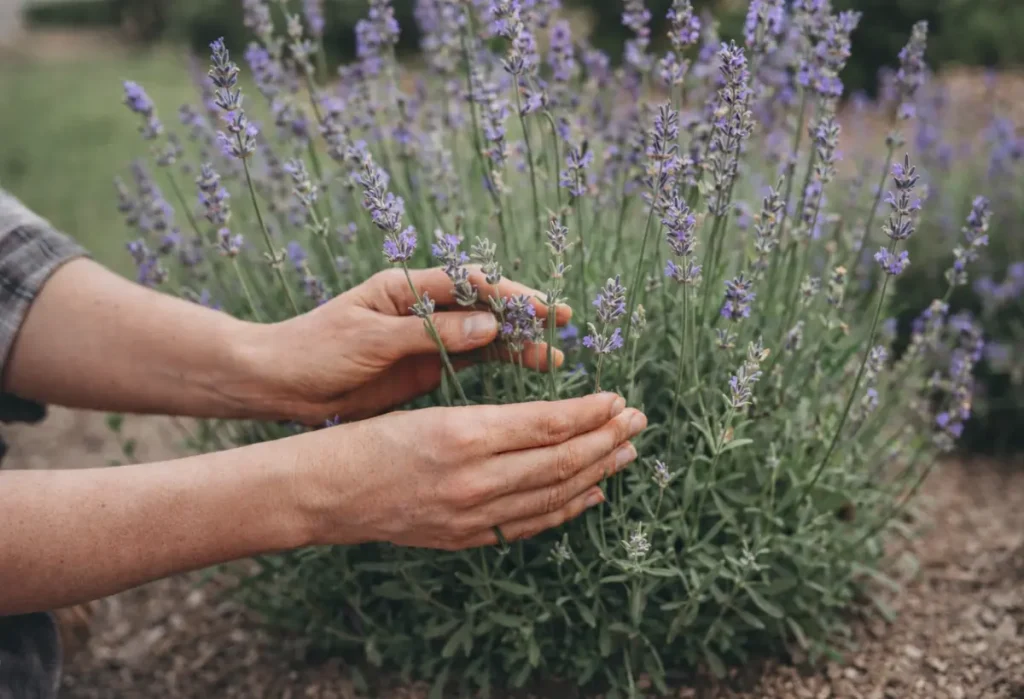
Lavender plants love sunlight. If kept indoors, they will die quickly. Lavender plants require at least 7 to 8 hours of sunlight. It’s best to place the plant in a south- or west-facing location, as this location will provide adequate sunlight. Many people recommend keeping it indoors near a window, but I’ve even tried it near a window in my own home, and the plant dies after a few days. So avoid it.
Watering Lavender Correctly
Many people harm lavender plants by overwatering them, even though they try to take good care of them. But they’re actually killing the plant. Lavender naturally prefers dry conditions, so watering should be done only when the top 2–3 inches of soil feel completely dry.
In summer, watering about 2–3 times a week is usually sufficient, while in winter, this should be reduced to once every 7–10 days. It is also very important that water does not accumulate at the bottom of the pot, as stagnant water can quickly cause root rot. Therefore, whenever you plant a lavender plant in a pot, the soil in the pot should be well-drained.
Best Soil Mix for Potted Lavender
Lavender needs well-draining soil—regular garden soil won’t work. If you use regular garden soil, your plant’s roots may rot and the plant may die quickly. Therefore, I’ve provided my own soil mix below. Use my soil mix and you’ll see good growth.
Perfect soil mix:
- 40% garden soil
- 30% sand (for drainage)
- 30% compost or cocopeat
Optional: Add perlite or river sand for better aeration.
Pruning & Maintenance
Pruning lavender is essential for keeping the plant healthy, compact, and full of flowers. Regular trimming encourages new growth. The best time to prune is right after the flowering cycle ends, as this helps the plant prepare for the next bloom phase.
When pruning, cut back about one-third of the plant, but be careful not to cut into the tough, woody stems at the base. Focus on removing any dead or dying branches along with the soft green growth. With regular pruning, your lavender plant will become bushier and produce more vibrant flowers.
Fertilizing Lavender
Lavender doesn’t require much fertilizer. If you can’t fertilize at all, that’s fine. If you must, use a light organic fertilizer once a month; vermicompost or liquid seaweed works well. Avoid fertilizers with high nitrogen content (they reduce flowering).
Less fertilizer = more fragrance.
Temperature & Climate
Lavender grows best in warm, dry climates, making it a great choice for sunny balconies or terraces. The optimal temperature for it is between 15°C and 40°C, where the plant can grow well and produce abundant flowers. It’s important to protect lavender from heavy rain and frost, as excessive humidity and extreme cold can damage the roots.
Common Problems & Solutions
1. Yellow leaves
- Cause: Overwatering
- Fix: Reduce watering + improve drainage
2. No flowers
- Cause: Lack of sunlight or overfeeding
- Fix: Increase sunlight exposure
3. Dry plant
- Cause: Underwatering or poor soil
- Fix: Adjust watering + improve soil mix
4. Fungal issues
- Cause: High humidity
- Fix: Keep plant airy and dry
Indoor vs Outdoor Care
| Factor | Indoor | Outdoor |
|---|---|---|
| Sunlight | Needs bright window | Direct sunlight ideal |
| Growth | Slower | Faster |
| Risk | Low airflow | Rain damage possible |
Pro Tips for Healthy Lavender in Pot
If your plant is indoors, keep it outside during the day to prevent it from getting sunlight. If your plant is outdoors and it’s raining, keep it in a place where it won’t be exposed to rainwater.
Conclusion
In conclusion, caring for lavender plants in pots becomes easy when you follow a few essential principles. This plant thrives in conditions that closely match its natural environment—plenty of sunlight, well-draining soil, and minimal watering. Instead of constant attention, lavender prefers a balanced approach where you avoid overwatering and allow the soil to dry out between watering cycles.

My name is Jugraj Singh, the founder and author of Evergreenguides. I share practical tips and real-life insights on indoor and outdoor gardening, plant care, and improving home air quality, helping readers create greener and healthier living spaces.