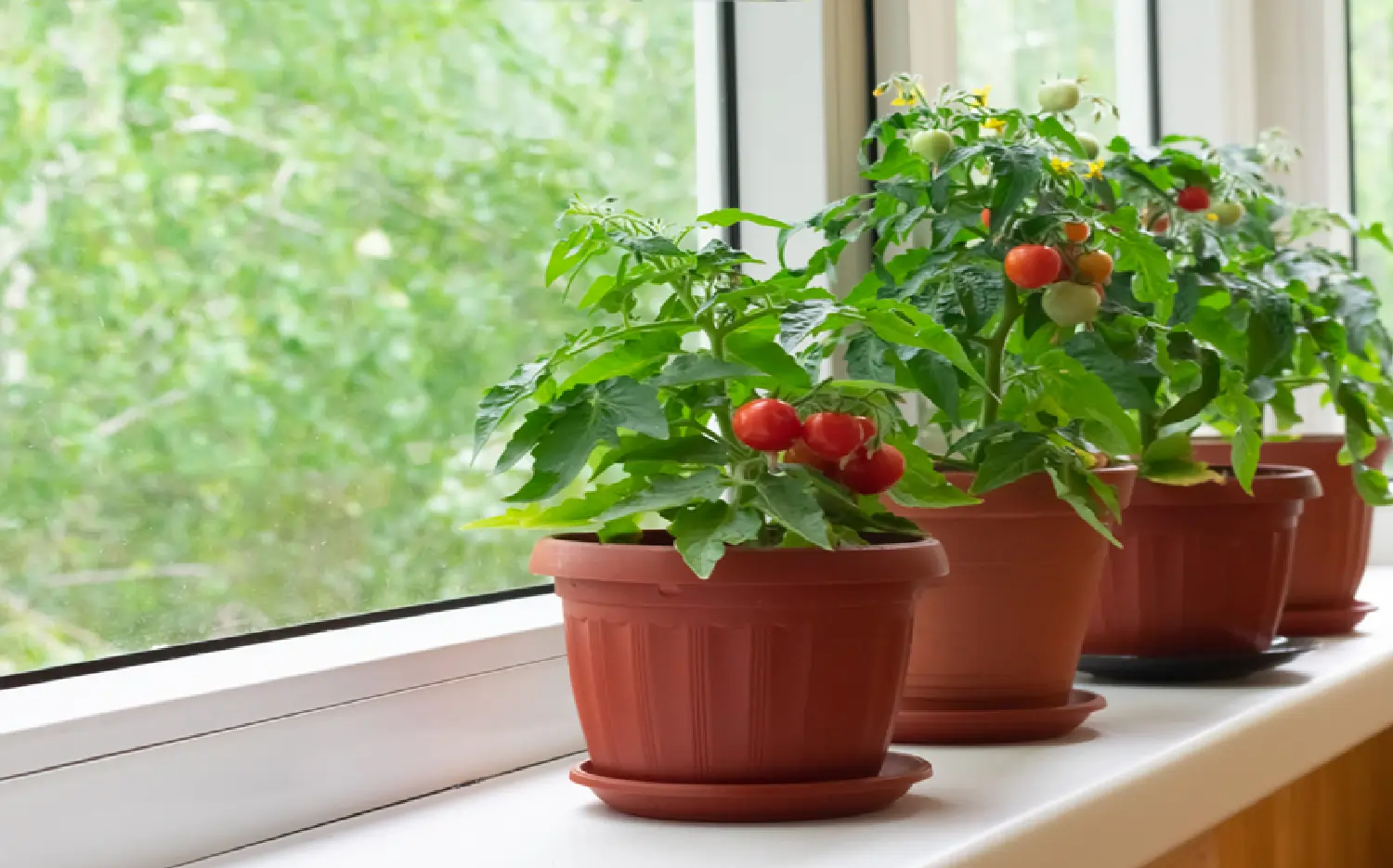
Did you know that the tomatoes available in the market are not organically grown, but rather are grown quickly using chemicals to be sold in the market? Many people want to know how to grow tomatoes indoors because they now want to grow chemical-free tomatoes at home.
If you’re a beginner wondering if you can grow tomatoes indoors, answer is yes. With the right pot, good soil, sufficient lighting, and a little care, tomatoes can be grown indoors.
In this guide, learn how to grow tomatoes indoors step by step, including how to plant tomato seeds indoors, choose the best soil, provide proper light, and even grow tomatoes indoors in winter. this guide is written especially for beginners who want real results not complicated gardening theory.
Can Tomatoes Be Grown Indoors?
Yes, tomatoes can absolutely be grown indoors and I have already told you in my How to Grow Flowers Indoors blog post how I have grown and harvested tomatoes organically at home.
Why indoor tomato growing works
Tomato plants are warm-season plants, but when they receive proper care in an indoor environment, they grow well even in homes, apartments and small spaces. The biggest advantage of indoor growing is that the temperature remains more stable, due to which tomato plants are not stressed by sudden weather changes.
In addition, the risk of pests and plant diseases indoors is significantly reduced, which keeps the plants healthy and strong. This method makes it possible to grow tomatoes year-round, regardless of the weather conditions outside. Just remember that not every tomato variety is suitable for indoor growing, so it is very important to choose the right variety for best results.
Best Tomato Varieties for Growing Indoors
If you want to plant tomatoes indoors, then you should plant the right variety of tomatoes at home. If you do not plant the right variety of tomatoes at home, then your hard work will go waste and you will not get the results you were expecting.
- Cherry tomatoes are the best option for indoor gardening because they are small in size, grow quickly and adjust easily to pots.
- Patio tomatoes are specially designed for containers. These plants are small in size, don’t spread much, and grow easily in pots. Their root systems are also comfortable within the container, so they don’t require much space or support.
- Dwarf tomato varieties are small in size and grow easily in a small space. They don’t require much support or space, so they’re a great option for beginners when it comes to indoor and container growing.
Note: Large or vine-type tomato varieties are not suitable for indoor growing because they require more space, strong sunlight, and extra support, which is difficult to provide indoors.
What Do You Need to Grow Tomatoes Indoors?
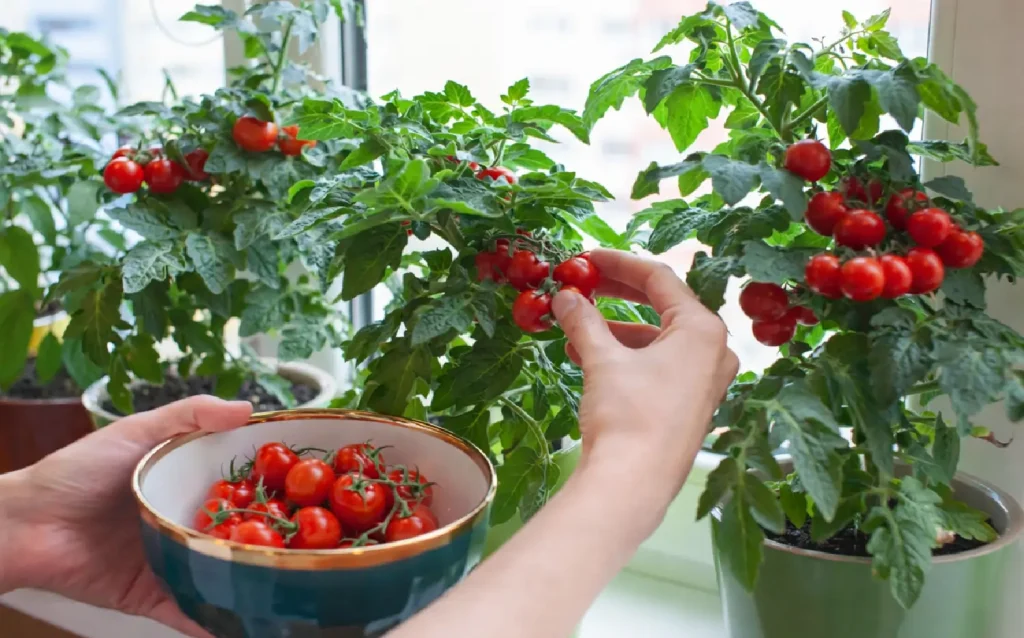
Growing tomatoes indoors requires a simple and proper setup. You’ll need pots at least 8–12 inches deep with drainage holes to drain excess water. Tomato plants need 6–8 hours of good sunlight daily, and grow lights can be used if natural light is insufficient. The soil should always be well-draining and nutrient-rich, such as a good potting mix. Adding a little fertilizer or organic compost is also important for healthy growth. Fresh air flow is also essential, which can be achieved through an open window or a fan.
How to Plant Tomato Seeds Indoors (Step-by-Step)
So far in this blog post, we’ve learned which varieties of tomato seeds we should choose for growing tomatoes indoors and why our homes are ideal for growing tomatoes indoors. Now, we’ll learn how to plant tomato seeds indoors.
Step 1: Choose Quality Seeds
Always use fresh, high-quality tomato seeds to grow tomatoes indoors. Good seeds are stronger, germinate faster, and increase the chance of producing healthy plants. It’s best to choose seeds specifically suitable for indoor growing, as they perform better in limited space and a controlled environment. Using old or low-quality seeds can result in weak plants or those that may not germinate at all.
Step 2: Prepare the Soil
It’s crucial to prepare the soil properly before planting tomato seeds. Fill small pots or seed trays with well-draining potting soil that isn’t too heavy. The soil should be slightly moist, neither completely dry nor too wet. Such soil easily provides both air and water to the roots, allowing the seeds to germinate properly.
Step 3: Plant the Seeds
After preparing the soil, now comes the step of planting the tomato seeds. Seeds should not be planted too deep in the soil, just about ¼ inch deep is enough. After placing the seeds, cover them gently with a little soil so that the seeds get both air and moisture. do not press the soil too much, otherwise the seeds may face difficulty in growing.
Step 4: Watering
After planting the seeds, water them very gently. The soil should always remain slightly moist, but never soggy or waterlogged. Overwatering can cause the seeds to float or rot. Now, until the seeds germinate, you should maintain the moisture of the soil by watering it a little every day.
Step 5: Germination Time
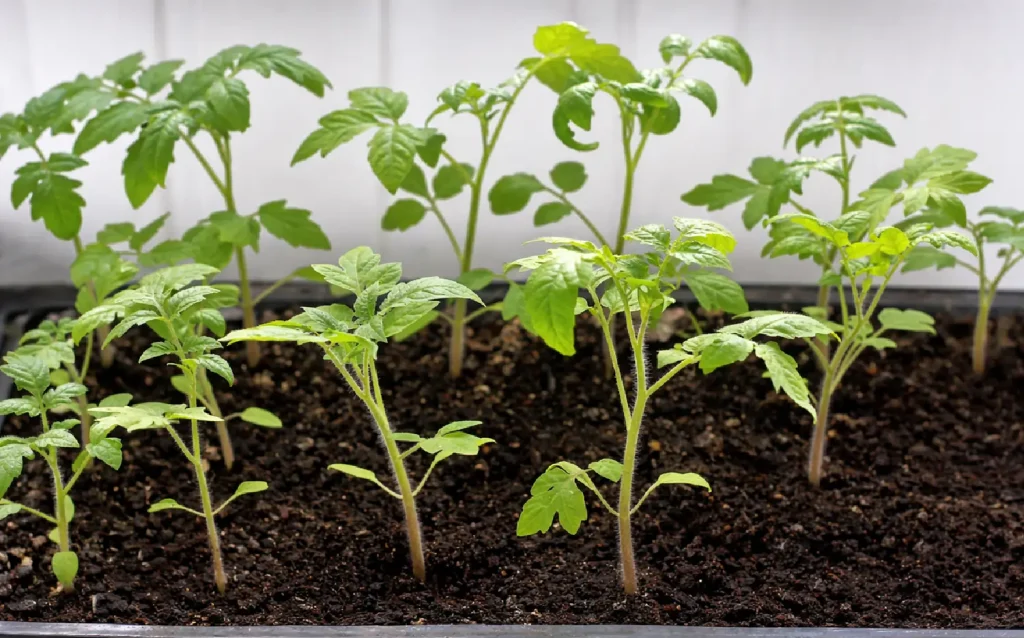
After planting the seeds, germination begins, during which the seeds slowly begin to sprout. Tomato seeds typically germinate within 5 to 10 days. If you have any questions about growing tomatoes indoors, please ask in the comments section.
Note: Let your tomato seedlings grow 3–4 inches tall, transform them into bigger pots.
Best Soil for Indoor Tomatoes
Proper soil is crucial for the healthy growth of indoor tomatoes, as healthy soil produces healthy tomatoes. Tomato plants need soil that drains water easily, so that the roots can get both air and nutrients. If you want to make your own soil, you’ll need to mix 60% potting soil, 20% compost, and 20% perlite or sand, whichever you have available. Normal garden soil should be avoided for indoor pots, as it hardens quickly and can make it difficult for roots to grow.
Light Requirements for Indoor Tomato Plants
At least 6–8 hours of bright sunlight is needed daily by tomato plants. This plant should be placed near a south-facing window where it will grow best. If natural sunlight is insufficient, this deficiency can be easily covered by using LED grow lights.
Grow lights typically need to be on for 12–14 hours daily to provide the plant with enough energy. Grow lights become even more important in winter, when sunlight is weak, as both plant growth and flowering are supported. With the right light, indoor tomato plants become strong and produce good fruit.
How Long Do Tomatoes Take to Grow Indoors?
Growing tomatoes indoors takes some time. Generally, tomato seeds germinate in 5–10 days, after which the plant gradually strengthens over 2–3 weeks at the seedling stage. After that, with proper light and care, the plant begins to flower in 4–6 weeks. My tomato plants take 8–12 weeks from seeding to harvest when I seed and when I harvest. I have planted and harvested almost every type of plant in my house, but my experience is that cherry tomatoes grow faster indoors.
Common Problems When Growing Tomatoes Indoors
Indoor tomatoes usually grow healthy, but I’ll share my experience with you, what problems I faced and how I fixed them. When I first started growing tomatoes indoors, I didn’t know much about the actual signals they send to the plant and what the problem was. So, you’ll have to understand them.
- Yellow leaves: This problem is often caused by overwatering or a lack of nutrients. In this case, reduce watering slightly and add a balanced fertilizer or compost.
- No flowers or fruits: Indoor tomato plants do produce flowers, but sometimes they don’t produce fruit. This problem can be quite confusing for beginners, but in reality, it has some common and logical reasons. outdoor plants are pollinated by bees and wind, but this natural process is missing in indoor environments. Therefore, flowers don’t turn into fruit. A simple solution is to give the plant a light shake once a day or gently touch the flowers with a soft brush to allow pollination to occur.
- Weak ya leggy plants: If you notice your plant becoming too tall and weak, this is a sign of insufficient sunlight. Place the plant in a bright location or use grow lights.
Grow Tomatoes Indoors in Winter (Special Tips)
It’s perfectly possible to grow tomatoes indoors during the winter, but it just requires a little extra care. Ideally, the room temperature should be between 18–26°C (65–78°F) during winter, as extreme cold slows plant growth. Natural sunlight is usually scarce during this season, so using daily grow lights is very helpful for tomato plants.
In winter, the soil remains moist for longer, so watering should be done at a slightly lower frequency, otherwise the roots can be damaged. Also, it’s important to protect the plants from direct contact with cold air or open windows, as cold drafts can cause plant stress.
If the balance of temperature, light and watering is maintained correctly, indoor tomato plants grow healthy and produce good fruits even during peak winter.
Conclusion
I’ve shared my experiences in the blog post “How to Grow Tomatoes Indoors” detailing the problems I encountered while growing tomatoes indoors, how I solved them, and also providing a perfect soil. If you’re a beginner, you should start with cherry tomatoes.
FAQ
Q1. Can tomatoes grow indoors without sunlight?
Yes, tomatoes can grow indoors using grow lights if natural sunlight is not available.
Q2. Do indoor tomatoes need pollination?
Yes. Lightly shaking the plant or using a soft brush helps pollination.
Q3. Why are my indoor tomato plants not producing fruit?
Usually due to low light, lack of pollination, or nutrient deficiency.

My name is Jugraj Singh, the founder and author of Evergreenguides. I share practical tips and real-life insights on indoor and outdoor gardening, plant care, and improving home air quality, helping readers create greener and healthier living spaces.