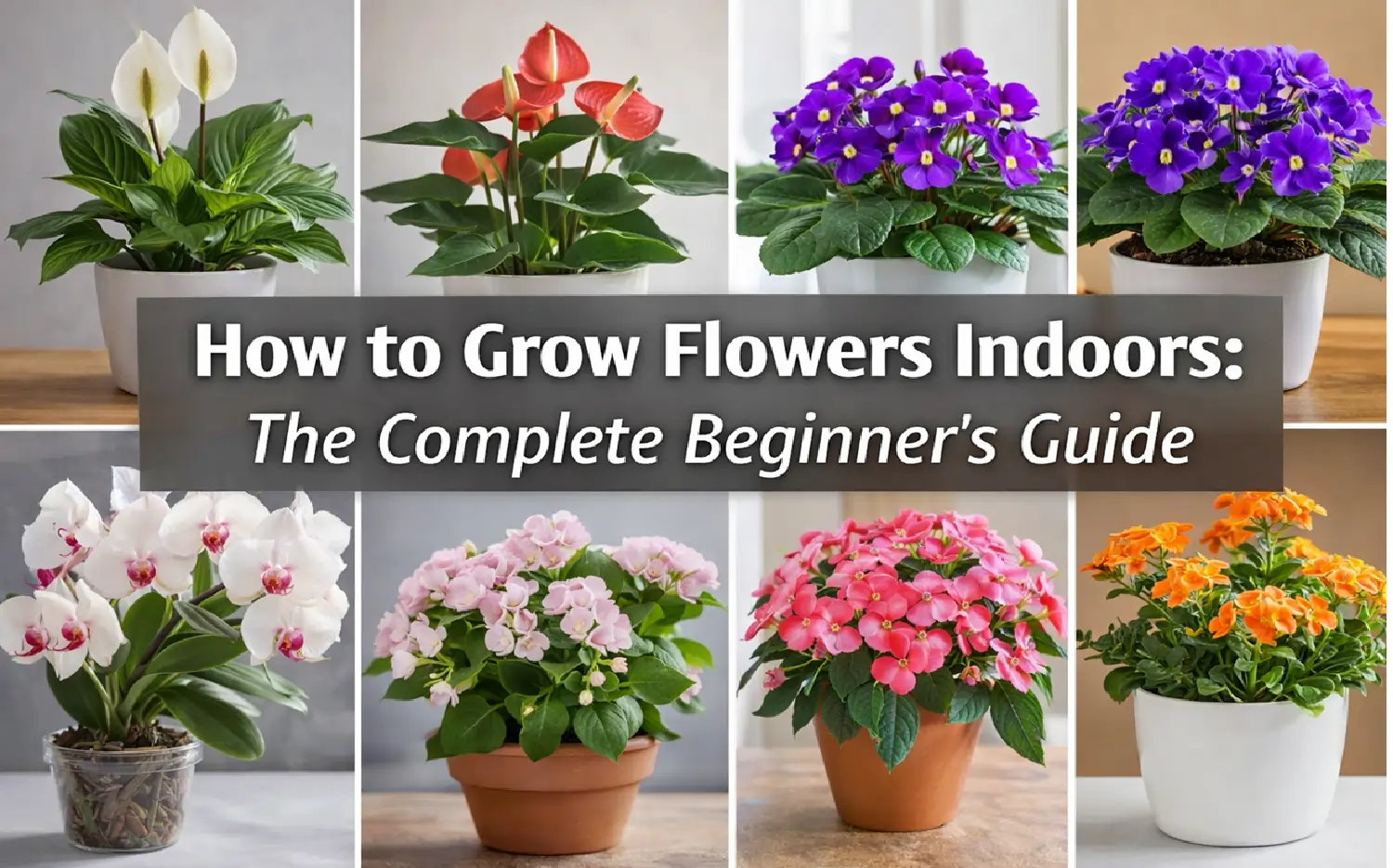
In today’s fast-paced lives, most people spend a significant portion of their day confined to closed rooms and staring at mobile screens. This directly impacts our minds, leading to increased mental stress and anxiety. In such times, taking a little time out of your day to grow flowers indoors not only beautifies your home but also provides peace of mind.
If you are a complete beginner and want to learn how to grow flowers indoors, make sure you read this blog post till the end. I’ll be sharing practical tips along with my personal experiences, so you can avoid common mistakes and take better care of your indoor flowers from day one.
Especially in United States, where most people live in apartments or indoor-focused homes, not everyone has access garden. But that doesn’t mean you should be deprived of the beauty of flowers. with the right information and little care, flowers can be grown indoors. In fact, I’ve even successfully grown tomatoes indoors and harvested them myself.
If you want to grow indoor air purifier plants that are safe for your pets, be sure to read this detailed guide: Best Indoor Plants for Air Purifying — Pet-Safe Options That Actually Work
Why Grow Flowers Indoors?
The biggest benefit of growing flowers indoors is that they not only enhance the beauty of the home, but also have a positive impact on mental and physical health. Indoor flowers help purifying the air and reduce the stuffiness of indoor living. many flowering plants absorb harmful elements from the air, making the environment cleaner and healthier, improving the indoor living experience.
Additionally, spending time around plants lowers cortisol (a stress hormone) levels in the body. This is why being surrounded by flowers and greenery can help you feel lighter and reduce anxiety.
For this reason, many experts and mental health specialists consider indoor gardening a form of natural therapy. Spending a few minutes daily with plants not only improves the home environment but also improves its positive impact.
Understanding Indoor Flower Basics
Before planting indoor flowers, understand these 3 things.
- Light: Most indoor flowers prefer bright, but not direct, sunlight. an east- or south-facing window is best for them.
- Water: Well-draining soil is crucial for indoor flowers. If water stagnates in the soil, the roots of the plants rot and the flowers don’t bloom properly. always use soil that drains easily and has drainage holes at the bottom of the pot. water only when the top soil feels dry.
- Temperature & Humidity: Indoor flowers thrive in normal room temperatures. Extreme cold or heat can harm them and cause them to wilt. A mildly humid environment is best for flowers, especially in winter.
Best Flowers to Grow Indoors
Below are the best indoor flowers for beginners in USA, chosen for easy care and reliable blooming.
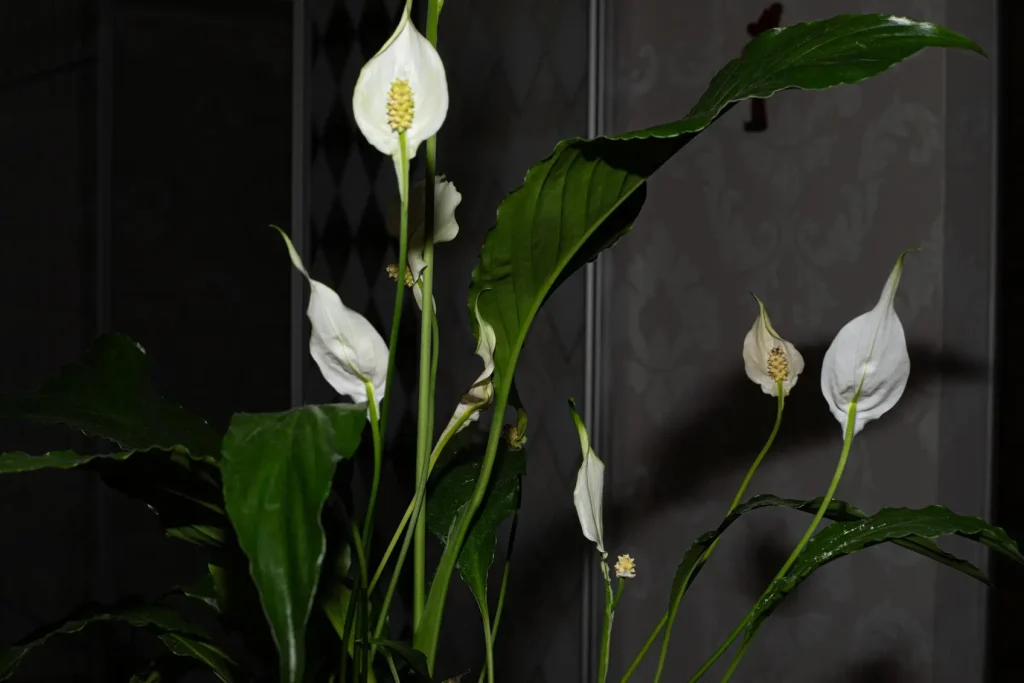
1. Peace Lily (Spathiphyllum)
Peace lily is an indoor plant considered the best for both beauty and health. Its white flowers add an elegant touch to your home and also act as nature’s best air purifier. If you live in an apartment or somewhere that doesn’t get much sunlight, peace lily is the perfect choice.
The best part is that this plant signals itself—its leaves droop slightly when it needs water. This makes it quite easy for beginners to grow.
Peace Lily Care Tips
Where should it be kept: Peace Lily does not like direct sunlight at all. Therefore, you should keep it near an East or North facing window or where there is bright but indirect light. You can keep it in the bedroom, living room or office, then its beauty will be enhanced. Just avoid keeping this plant in direct sunlight as this can burn its leaves.
How should water be given: Watering Peace Lily plants once a week is enough or you can check it with your hands. If the soil on top of the pot feels dry then water it. Another important thing is that giving too much water causes the roots to rot.
What should be the soil for Peace Lily?
A well-drained and light soil mix is best for Peace Lily. To make the best soil mix, take 50% normal garden soil/potting soil, 30% cocopeat, and 20% perlite (if perlite is not available, use river sand). Mix them thoroughly and pour them into the pot.
With the soil mentioned above, the Peace Lily plant does not get waterlogged, the roots remain healthy, and the plant grows faster.
Fertilizer: Best fertilizer for peace Lily is a balanced liquid fertilizer, such as NPK 10-10-10 or NPK 20-20-20. Applying it just once a month is sufficient. Always dilute the fertilizer in water; never apply it directly to the soil. If you prefer organic fertilizer, seaweed liquid fertilizer or vermicompost tea also work well. Keep in mind that over-fertilizing can burn the leaves instead of promoting flowering, so a small amount is best.
2. Anthurium
Anthurium plant is one of my favorites because it is a very stylish and premium looking indoor flowering plant. Its bright green leaves and red, pink, or white flowers instantly give an elegant and modern look to the interior of the house. If you want a plant that flowers for a long time in your home or office, then Anthurium is an excellent choice. This plant gives a fresh and positive feel to the indoor space.
another advantage of this plant is that its flowers remain fresh for one to two months, so there’s no worry about frequent flower drop. With a little care, this plant is easily manageable even for beginners.
Anthurium Care Tips
Where should it be kept: Anthuriums don’t like direct sunlight. Therefore, you should keep them in a bright, but indirectly lit area. for the best placement, you can place them near an east- or north-facing window. You can keep these plants in your living room, bedroom, or office. keeping it in direct sunlight can burn the leaves and flowers.
How should water be given: The soil of Anthurium plants should always remain slightly moist and when the soil on top feels a little dry then water it.
What should be the soil for Anthurium?
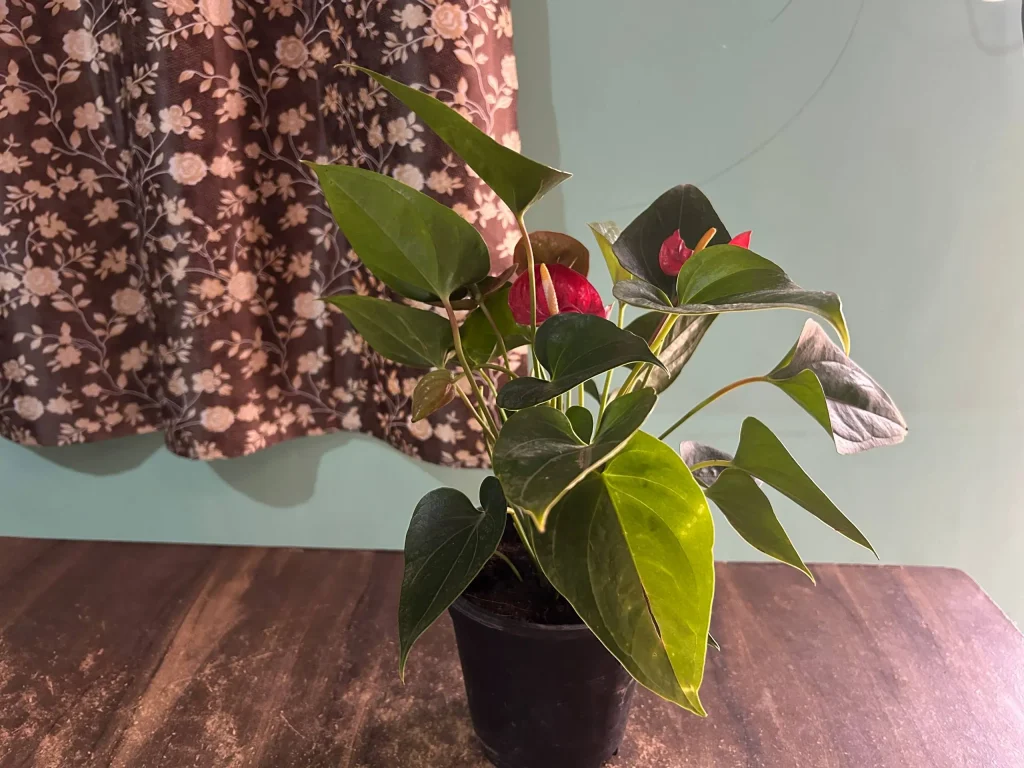
I’ve prepared my Anthurium plant’s soil by mixing 90% cocopeat and 10% perlite. It’s growing very well in this soil. You can see my Anthurium plant in the photo below. and if you don’t want this soil, I’ll tell you about another soil: 40% potting soil, 50% cocopeat, and 10% perlite or river sand.
Fertilizer: The best fertilizer for Anthurium is a balanced liquid fertilizer, such as NPK 10-10-10 or NPK 20-20-20. Applying it just once a month is sufficient. Alternatively, you can apply vermicompost once a month. Remember, you should not apply both together; you should apply only one fertilizer.
3. African violets
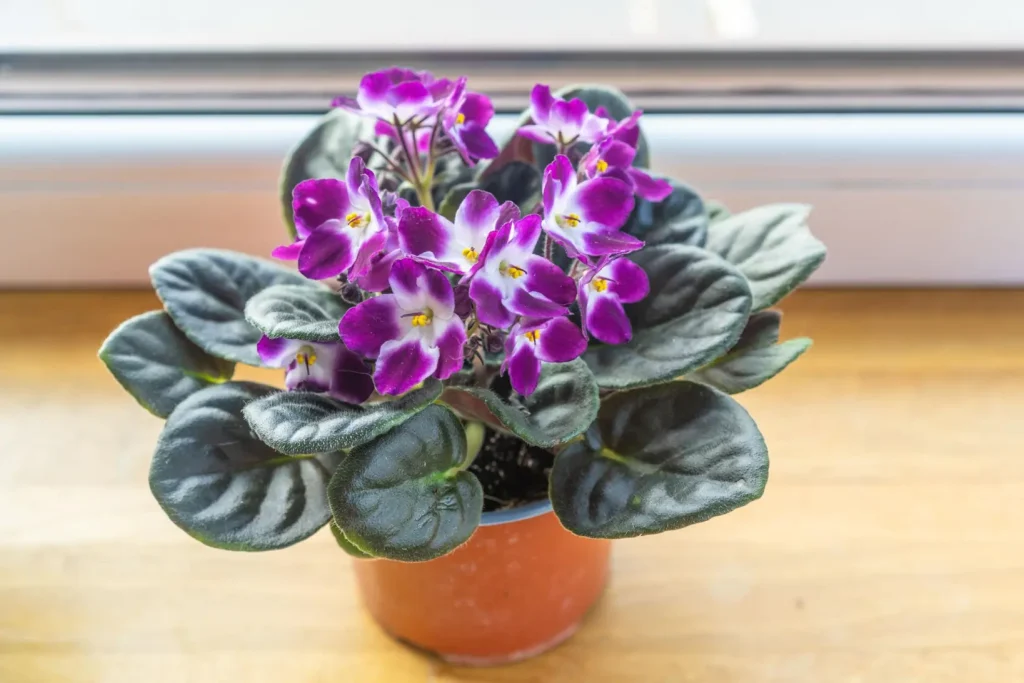
If you are a beginner and are searching for a great flowering plant, then you must plant African Violet in your home. It is a small, compact and very cute indoor flowering plant, which keeps blooming continuously even in a small space. Its purple, pink, blue or white colored flowers instantly brighten up any corner of the house. If you live in an apartment or want a flowering plant to keep on a table/shelf, then African Violet is the perfect choice.
African Violet Care Tips
Where should it be kept: African Violet flower plant prefers bright but indirect light. You can place it near an east-facing window or on a table, shelf, or study desk. also do not store in a very cold place or in direct flow of air conditioner. you can keep removing old wilted flowers with this plant.
How should water be given: Bottom watering suits the African violet plant the most. Now, to know how to do this, place your pot in a tray filled with water for 10-15 minutes, so that the water spreads through the drain holes to the roots of your plant and the entire soil. Remember not to let water fall on its leaves.
What should be the soil for African Violet?
African violets require a very light and well-drained soil mix, such as 40% potting soil, 30% cocopeat, and 30% perlite/vermiculite. This soil prevents stickiness and provides air circulation to the roots, which improves flowering.
Fertilizer: To encourage consistent flowering in African Violet plants, a light liquid flowering fertilizer should be applied once a month. A balanced NPK fertilizer (such as 10-10-10 or 20-20-20) should be thoroughly dissolved in water. Always apply fertilizer in small quantities, as excessive amounts can damage the leaves rather than promote flowering. It’s best to stop or reduce fertilizer application significantly during the winter season to avoid overstressing the plant.
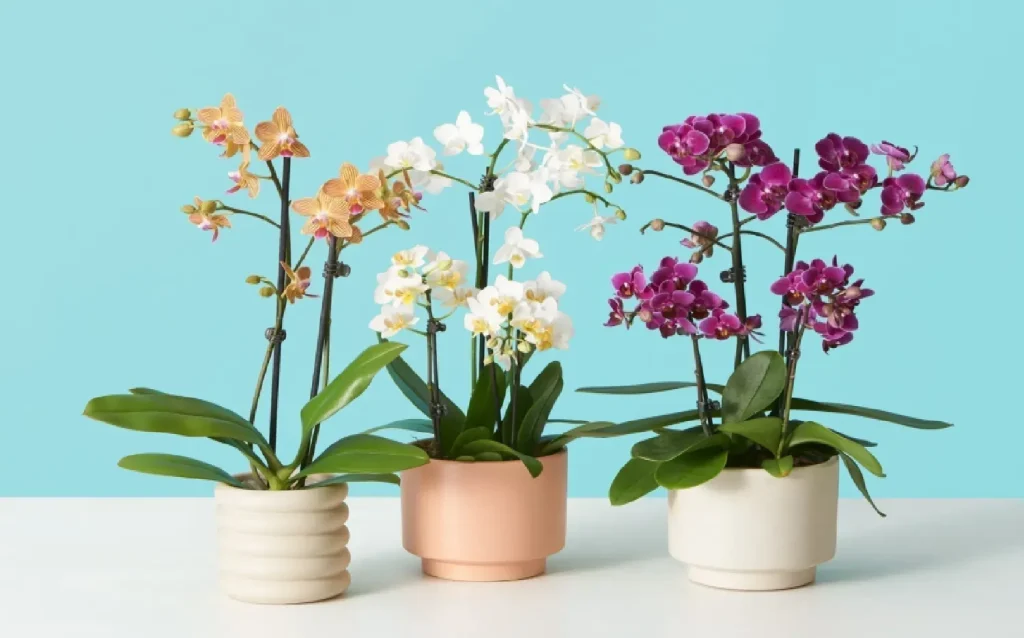
4. Phalaenopsis Orchid
Phalaenopsis Orchid is a very elegant and premium indoor flowering plant, which gives a classy hotel-like look to the house. People often think that orchids are difficult to maintain, but to tell the truth, this Phalaenopsis Orchid is quite friendly even for beginners. Its flowers remain for 2-3 months, hence this plant is perfect for those who want to enjoy flowers for a long time.
Phalaenopsis Orchid plant doesn’t require much space and should be placed in a bright corner of the living room, bedroom, or office. With a little proper care, this orchid plant will give you beautiful blooms two to three times a year.
Phalaenopsis Orchid Care Tips
Where should it be kept: Phalaenopsis orchids prefer bright but indirect light. You can place them near an east-facing window where they receive some morning light, as direct sunlight can cause their leaves to burn.
How should water be given: You can definitely bring an orchid plant into your home because orchid plants don’t require much water. Water them only once every 7-10 days, and only when the soil is nearly dry. However, if you water them every 2-3 days, overwatering can cause root rot.
What should be the soil for Phalaenopsis Orchid
Phalaenopsis orchids don’t like regular soil, as it can cause root rot. an airy and well-drained orchid mix (such as pine bark and charcoal) is best for this plant, as it prevents waterlogging and allows air to reach the roots. Orchid plants should always be planted in a transparent pot with drainage holes to ensure healthy and well-growing plants.
Fertilizer: Special orchid liquid fertilizer is best for Phalaenopsis Orchid. Apply it once a month, diluted to 1/2 strength (half the quantity) in water. If orchid-specific fertilizer is not available, you can use a balanced liquid fertilizer (NPK 10-10-10 or NPK 20-20-20) – but only at 1/4 strength (very dilute). That is, dilute only a quarter of the dose for normal plants in water and apply it once a month.
If chemical fertilizers are not available, you can give Seaweed liquid fertilizer (best alternative) or vermicompost tea (very dilute) as an organic option.
Keep in mind: Always apply fertilizer after watering and avoid fertilizer in winter.
5. Kalanchoe
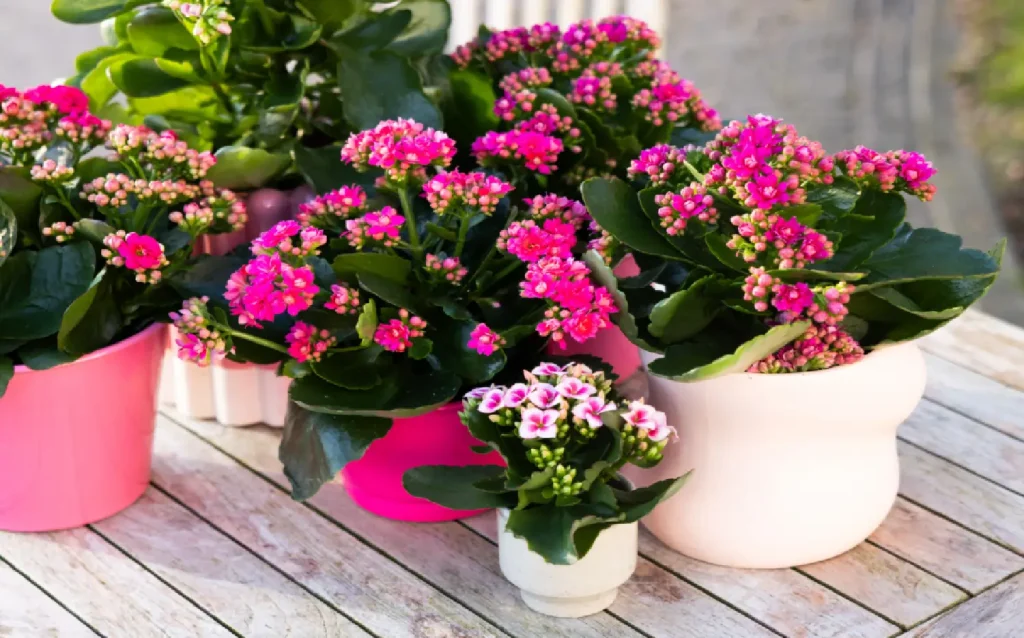
Kalanchoe is a succulent plant that is a very colorful and cheerful indoor flowering plant that brings positive vibes to the home. Its bright flowers in shades of red, pink, yellow, and orange make a small space feel fresh. If you want a plant that blooms for a long time with minimal care, Kalanchoe is a perfect choice, especially for beginners.
Kalanchoe Care Tips
Where should it be kept: I mentioned the plants above which everyone liked indirect bright sunlight but Kalanchoe likes bright direct sunlight, you should keep this plant near the South or West facing window of your house where it gets direct sunlight for 4-6 hours and yes keeping it in low light results in less flowering.
How should water be given: Kalanchoe flower plant is a succulent, it should be watered only when the soil in its pot dries out and once a week.
What should be the soil for Kalanchoe
Kalanchoe requires a light, well-draining soil mix. The best soil mix should be 50% garden soil/potting soil, 30% sand or perlite, and 20% cocopeat. This soil mix prevents waterlogging, protects the plant’s roots, and promotes healthy plant growth.
Fertilizer: Fertilizing Kalanchoe isn’t necessary, but if you want the plant to stay healthy and bloom profusely, a light fertilizer is beneficial. You can apply a balanced liquid fertilizer (NPK 10-10-10 or NPK 20-20-20) diluted in water at half its strength once a month. Seaweed liquid fertilizer or a very light vermicompost tea also work well as an organic option. Keep in mind that Kalanchoe is a succulent plant, so avoid overfertilizing.
6. Begonia
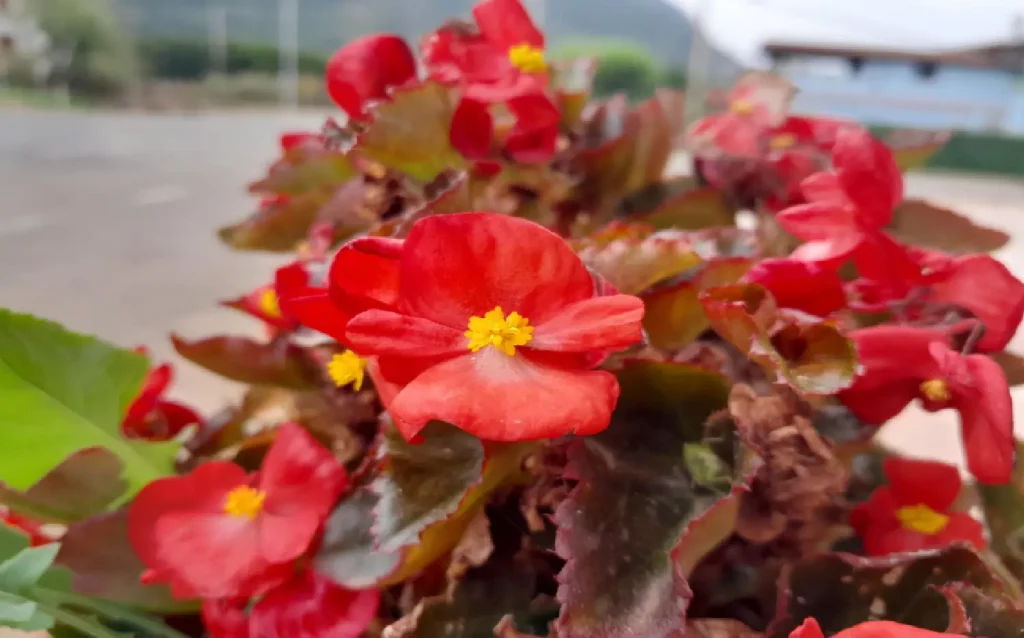
Begonia is my favorite plant. I brought this plant to my home last year because when I went to the nursery, I saw this flower plant. Along with flowers, the plant also had beautiful leaves which made this flower plant different from other plants and I kept it in my living area. You can keep this plant in the living room, bedroom or study area.
Begonia is also a good option for beginners, as with a little proper care it grows well and blooms from time to time.
Begonia Care Tips
Where should it be kept: Begonia flower plant likes bright but indirect light the most. You can keep it near an East or North facing window in your house. If you are keeping it in the living room or bedroom, then you should keep it in the bright corner.
Direct sunlight can cause leaves to burn and flowers to drop, and can even lead to plant death.
How should water be given: Begonias don’t like overwatering, but the soil of this plant should remain slightly moist, and water it when the top soil feels slightly dry.
What should be the soil for Begonia
Well-drained soil is essential for this Begonia plant, otherwise the roots will rot. for best results, a soil mix should be 50% potting soil, 30% cocopeat, and 20% perlite or river sand, so that water can drain easily and the roots can get air.
Fertilizer: Fertilizing a Begonia flower plant isn’t necessary, but if you want the plant to stay healthy and bloom well, a light fertilization is quite beneficial. you can apply a balanced liquid fertilizer (NPK 10-10-10 or NPK 20-20-20) diluted in water at half its strength once a month.
6. Bromeliads
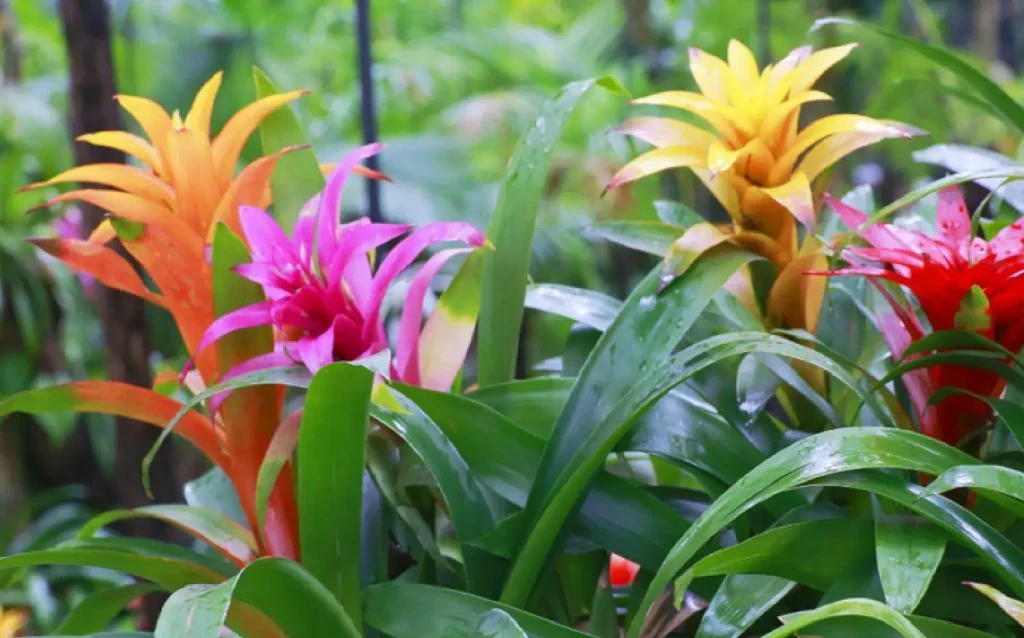
If you want to attract the attention of your guests, then having a Bromeliad flower plant in the living area of your home is a must. Because Bromeliad is a very unique and eye-catching indoor flowering plant, which gives the house an instant premium look due to its bright red, pink, orange or yellow center flower. this plant is considered ideal for apartments and modern homes, as they do not require much space or much sunlight.
The biggest advantage of this plant is its long-lasting flowers, eliminating the stress of repeated flowering. this plant is also quite friendly for beginners.
Bromeliad Care Tips
Where should it be kept: It’s best to place a bromeliad in a bright, but not direct sunlight. soft light near an east- or north-facing window, or behind a sheer curtain, is perfect. You can easily place it in a bright corner of your living room, bedroom, or office. keep in mind that placing a bromeliad in direct sunlight can burn its leaves and cause them to fade, so choose a location with indirect light.
How should water be given: Bromeliads don’t like too much water. If you want to plant a flower plant in your home but are too lazy to water it, then you should definitely plant a Bromeliad because you should water it only when the top layer of the pot dries up.
What should be the soil for Bromeliad
To prepare the soil for bromeliads, you need to create the best soil mix for this plant: 40% potting soil, 30% cocopeat, and 30% perlite or orchid bark.
Fertilizer: With bromeliads, fertilizer plays a supportive role, not a compulsory one. This plant doesn’t require much feeding, so if you do need to fertilize, do so very lightly and in limited quantities. The best option is liquid houseplant or bromeliad fertilizer.
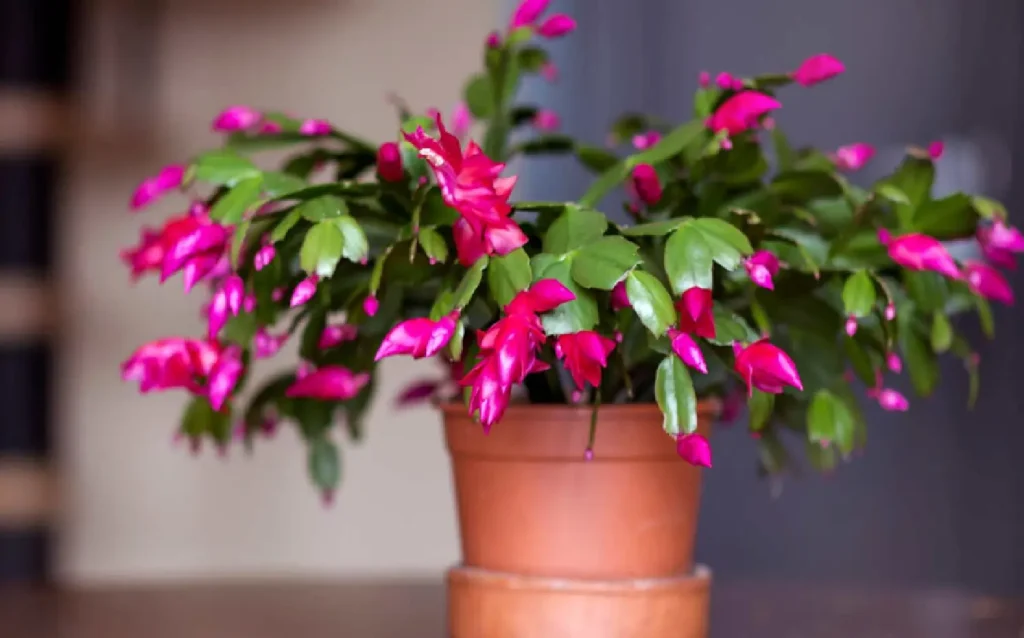
7. Christmas Cactus
Christmas Cactus is a very special indoor flowering plant. Now you must be thinking what is so special about it, it is a flowering plant, but it is not so. All flowering plants stop flowering in December. Christmas Cactus is the only rare plant that will give you flowers in the winter months.
The Christmas Cactus’s pink, red, white, or purple flowers look beautiful in a hanging pot or on a table, making it a perfect choice for apartments and indoor spaces.
Christmas Cactus Care Tips
Where should it be kept: Christmas Cactus love morning sunlight. After morning, you should the plant to bright, but indirect light. Keep it in a bright corner of your living room or bedroom. However, if you believe in Vaastu, you should avoid bringing this plant indoors.
How should water be given: The soil of a Christmas cactus should be kept slightly moist, and watered when the top soil feels slightly dry.
What should be the soil for Christmas Cactus
Well-drained, but moderately moisture-retaining soil is best for growing Christmas cactus plants. For the best soil mix, we need to thoroughly mix 40% potting soil, 30% cocopeat, 20% perlite/sand, and 10% compost to create the soil and then plant the plant.
Fertilizer: Fertilizing Christmas cactus should be limited and timed appropriately. This plant doesn’t require heavy feeding, but during the growth phase (spring and early summer), a light liquid fertilizer once a month strengthens the plant. You can also apply NPK 10-10-10.
8. Lipstick Plant
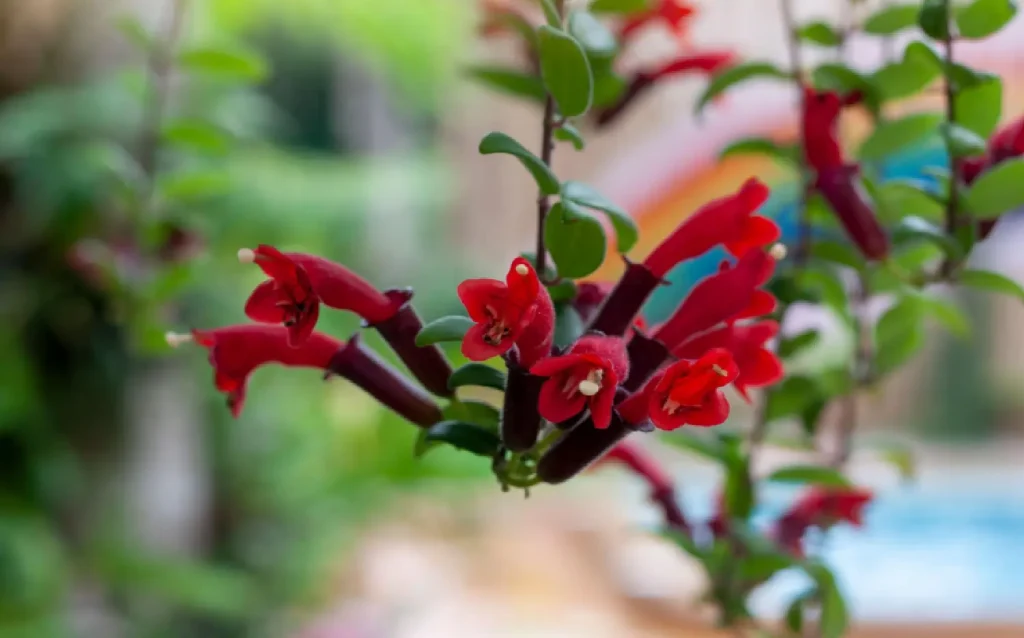
Lipstick Plant is a very attractive indoor flowering plant. This plant looks beautiful when kept in a hanging basket or on a shelf and also blooms in low light. plus point of this plant is that if it gets proper care, it keeps flowering from time to time and is acceptable even for beginners.
Lipstick Plant Care Tips
Where should it be kept: I recommend planting the lipstick plant in a hanging pot. You can hang this plant on an east- or north-facing balcony. This will enhance your balcony’s unique look.
How should water be given: Lipstick plant does not like overwatering at all, overwatering causes the flowers to drop. so balance is important, and you should only water when the soil feels slightly dry.
What should be the soil for Lipstick Plant
A well-drained and airy soil mix is best for lipstick plants. You can make a soil mix consisting of 40% potting soil, 30% cocopeat, 20% perlite/sand, and 10% compost.
Fertilizer: Fertilizing the lipstick plant is helpful, but in limited quantities. plant doesn’t like overfeeding. You can use a balanced liquid fertilizer NPK 10-10-10 or NPK 20-20-20 diluted to 1/2 strength in water.
9. Gloxinia
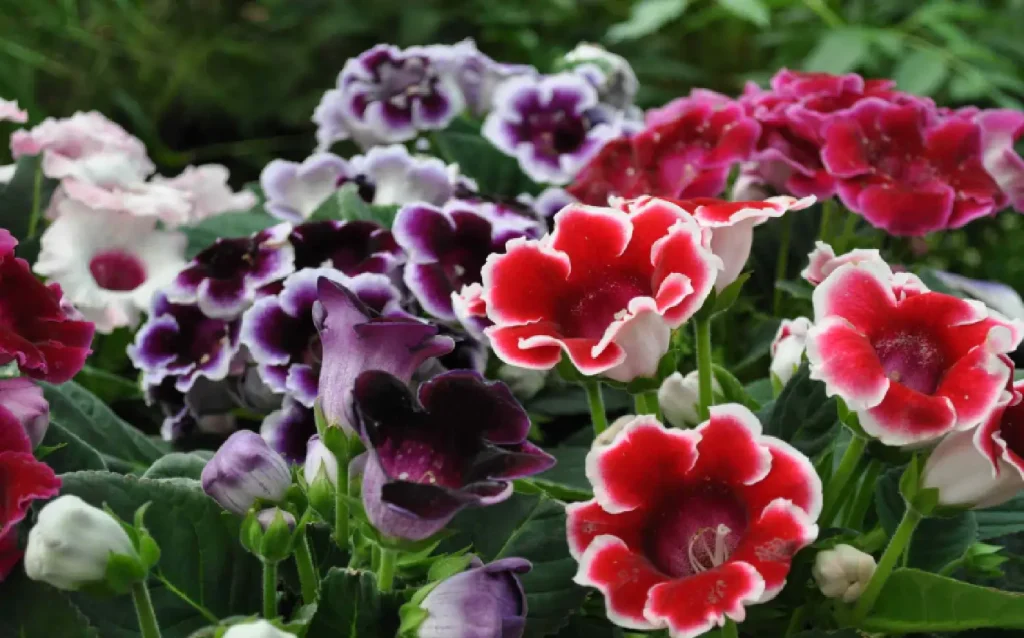
If someone told you it was a Gloxinia plant, would you believe it? No, right? But now, after what I’m going to tell you about the Gloxinia flowering plant, you can easily identify it. Its leaves are velvety and very soft. Its flowers bloom in purple, pink, red, or white.
This plant is also great for beginners, requiring just a little proper care. Given the right environment, Gloxinia produces consistent and large blooms, making them ideal for indoor decoration.
Gloxinia Plant Care Tips
Where should it be kept: Gloxinia plants purple, pink, red, or white flowers look very classy when placed on a table, shelf. Therefore, you should place it in a bright corner of the living room or bedroom.
How should water be given: While watering the Gloxinia plant, one should be careful that no water falls on the leaves and flowers of the plant and water the plant only when the top layer of the pot has dried.
What should be the soil for Gloxinia
Well-drained, soft, and nutrient-rich soil is best for Gloxinia. You can make a good soil by mixing 40% potting soil, 30% cocopeat, and 30% perlite/sand. If you have any questions, please ask in the comments section.
Fertilizer: Gloxinia requires light feeding to keep them healthy and produce large, bright flowers. You can feed them with a balanced NPK 10-10-10 or NPK 15-15-15 diluted to 1/2 strength in water.
10. Streptocarpus
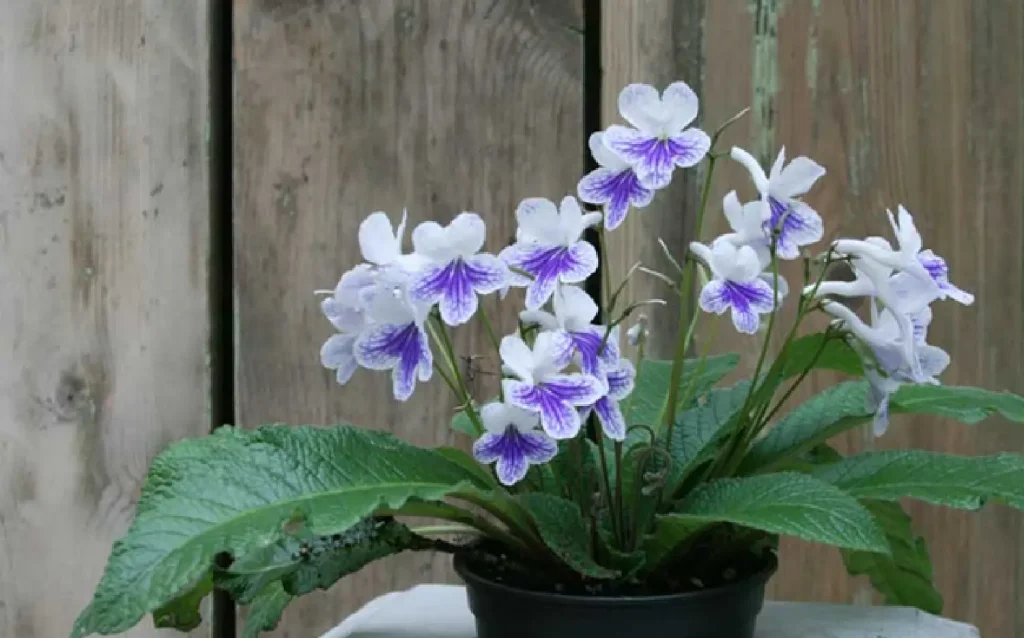
If you’re a beginner looking for a plant that’s easy to manage, consider the Streptocarpus plant. Streptocarpus flowers for a long time.
Special thing about this plant is that if it gets proper care, it flowers again and again, hence it is a very good plant for those who are starting indoor gardening.
Streptocarpus Plant Care Tips
Where should it be kept: Streptocarpus should be placed in a place that receives good light throughout the day, but does not allow strong sunlight to directly hit the plant. This plant grows best in dim, soft light, and its flowers remain fresh for a longer time. A bright corner in the house, a little away from a window, is suitable for it.
How should water be given: When watering Streptocarpus, it’s important to understand that this plant prefers balanced moisture, not wet soil. Instead of watering regularly, it’s best to water when the soil feels slightly dry on top. When watering, be careful not to water directly on the leaves or flowers, as this can cause spots and weaken the plant.
What should be the soil for Streptocarpus
The soil for Streptocarpus should be such that you mix 40% good quality potting soil, 30% cocopeat, 20% perlite or river sand and 10% compost.
Fertilizer: Streptocarpus doesn’t need much fertilizer. During the growing season (spring and summer), a light liquid fertilizer once a month is sufficient, and during the winter, fertilizer should be avoided.
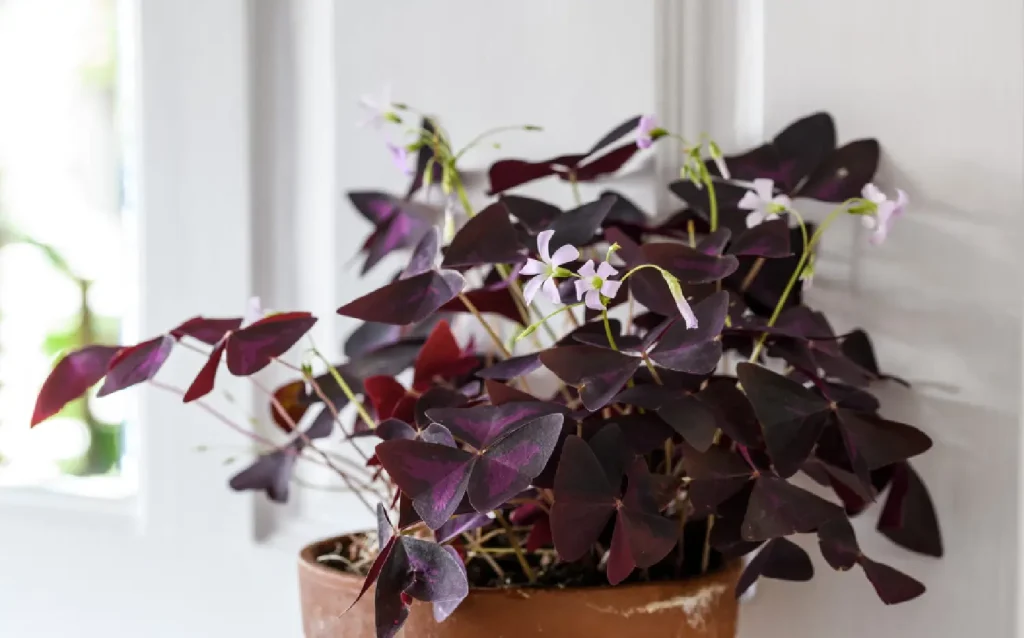
11. Oxalis
If you’re looking for a plant that has beautiful leaves as well as flowers, you should consider the Oxalis plant. The Oxalis plant’s purple leaves can enhance any corner of the house. A special feature of this plant is that its leaves open during the day and close at night, making it even more interesting. Oxalis is also considered a very manageable plant for beginners.
Oxalis Plant Care Tips
Where should it be kept: It’s best to place Oxalis plants indoors in location that receives good light throughout the day, but avoids direct sunlight. In soft, filtered light, its purple leaves retain their rich color and the plant appears healthy.
How should water be given: When watering Oxalis, it’s important that the soil isn’t constantly sticky or wet, but rather feels slightly moist. Instead of watering daily, it’s best to water only when the soil on top feels slightly dry. Unlike other plants, Oxalis doesn’t have roots; it has bulbs (tubers) at the base, which quickly rot in excess water, so overwatering is a major problem for this plant.
What should be the soil for Oxalis
In Oxalis soil, you should prepare 50% potting soil, 25% cocopeat, 25% perlite/river sand. This soil will prevent water from accumulating in the pot, which will keep the bulbs healthy.
Fertilizer: Oxalis doesn’t need a lot of fertilizer, but during the growing season (spring and summer), a light liquid fertilizer once a month is sufficient. It’s best to apply a balanced fertilizer NPK 10-10-10 or NPK 20-20-20 diluted to 1/2 the strength of water. When the plant is put into rest for a period of time, causing the leaves to drop, stop fertilizing altogether.
12. Hoya carnosa
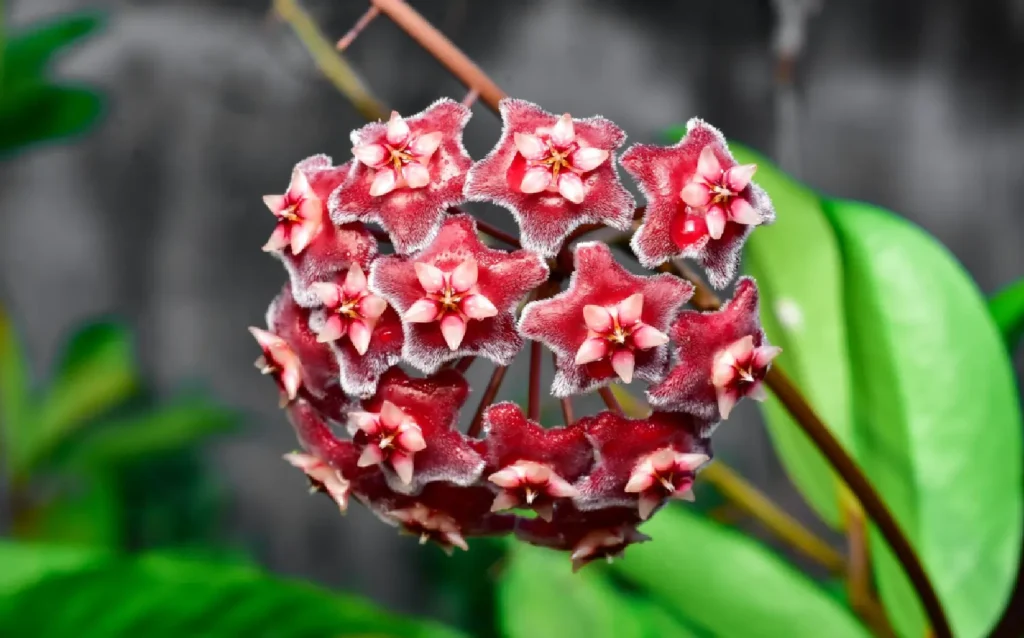
Hoya is a beautiful and long-lasting indoor flowering vine plant, famous for its thick, shiny leaves and waxy flowers. Its flowers grow in small clusters and give off a slightly sweet fragrance. If you want a plant that will last you years with low maintenance, Hoya is not to be overlooked.
Hoya carnosa Plant Care Tips
Where should it be kept: This plant looks beautiful when placed in a hanging basket, on a wall shelf, or near a window. Or, if you have an east- or northeast-facing home, you should plant it in a hanging pot on your balcony. Your home will look very premium.
How should water be given: Hoya likes to remain a little dry, so water it only when the top 2 to 3 inches of soil dries out or water it every 8 to 12 days.
What should be the soil for Hoya carnosa
The most important rule for soil for Hoya is that it shouldn’t be heavy or hold water, as the plant’s roots crave air. perfect, airy, well-drained soil is created by mixing 40% potting soil, 30% cocopeat, 20% perlite or orchid bark, and 10% compost.
Fertilizer: Hoya does not require much fertilizer, so you should not give it fertilizer.
13. Columnea gloriosa
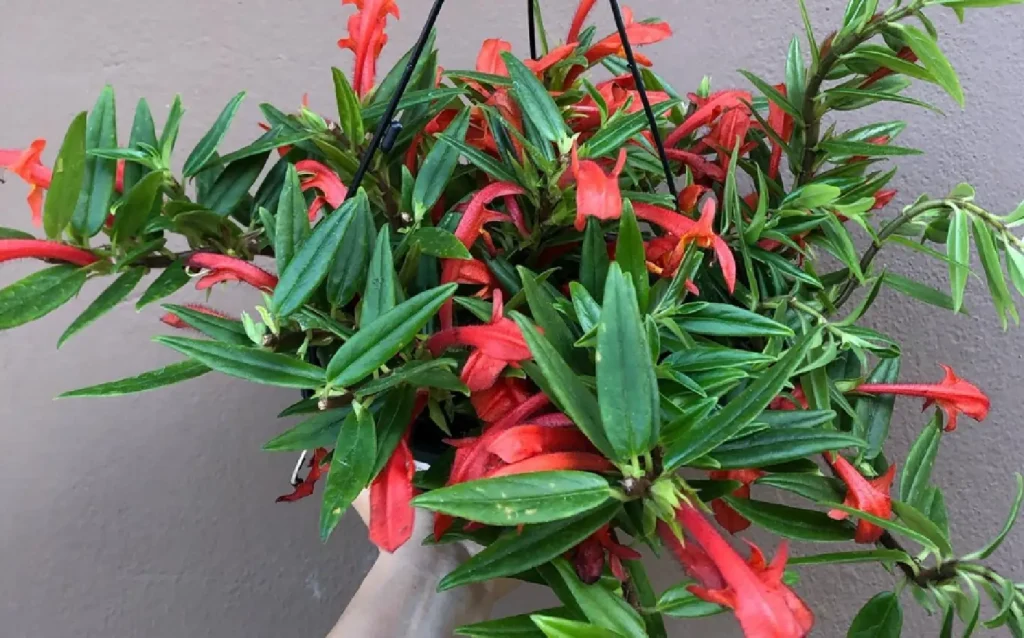
Columnea is a unique and eye-catching indoor flowering plant, with its bright orange-red flowers resembling goldfish. This makes it a great indoor plant, attracting everyone’s attention. another plus point of this plant is that with proper care, it blooms repeatedly, and flowers for a long time. This plant is manageable even for beginners, just a little consistency is required.
Columnea Plant Care Tips
Where should it be kept: This plant is ideal for keeping in a hanging basket or on a shelf. It can be planted in an East or North facing balcony. Keeping it in direct sunlight can cause the leaves and flowers to burn.
How should water be given: This is different from all the plants I mentioned above because this plant does not like both dry soil and overwatering. Water it when the soil above it feels a little dry.
What should be the soil for Columnea
Prepare the soil for Columnea by thinking of it as a little forest-type and spongy. Best results are obtained when you mix 35% light potting soil, 35% cocopeat, 20% orchid bark and 10% leaf compost.
Fertilizer: Columnea doesn’t like heavy fertilizers, so a light feeding approach is best for this plant. A fertilizer with a slightly higher phosphorus content is preferable for this plant, as this is what supports flowering.
14. Episcia
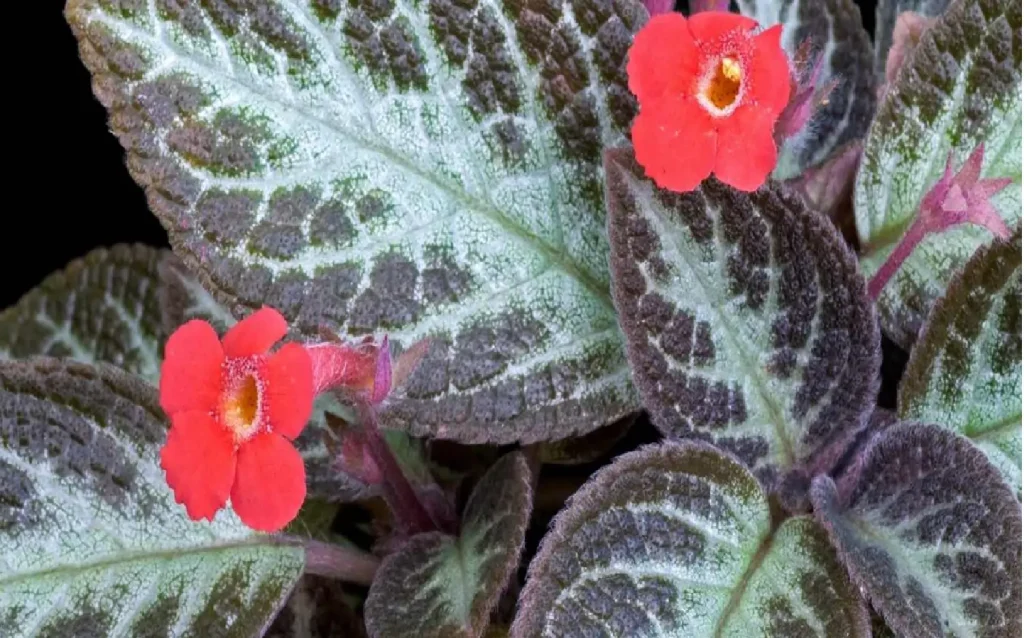
The full name of this plant is Episcia cupreata. Episcia is a very soft, colorful and decorative indoor flowering plant, which will make the house more beautiful than other plants with its velvety (soft) patterns and small, bright red, orange or pink colored flowers.
Episcia Plant Care Tips
Where should it be kept: This plant looks great on table edges, low shelves, or in wide pots. Episcia prefers bright but indirect light.
How should water be given: This plant doesn’t need to be watered daily; it’s best to water it when the soil feels slightly dry. When watering, be careful not to spill water on the leaves or flowers, as Episcia leaves are soft and can become stained if water remains on them.
What should be the soil for Episcia
This plant produces the best results when you use a mixture of 35% potting soil, 35% cocopeat, 20% leaf compost, and 10% perlite. This soil provides air circulation to the roots, keeping the plant healthy and blooming well.
Fertilizer: Episcia doesn’t need much fertilizer; a light liquid fertilizer once a month during the growing season (spring–summer) is sufficient. A balanced fertilizer like NPK 10-10-10 can be used, but avoid it in winter.
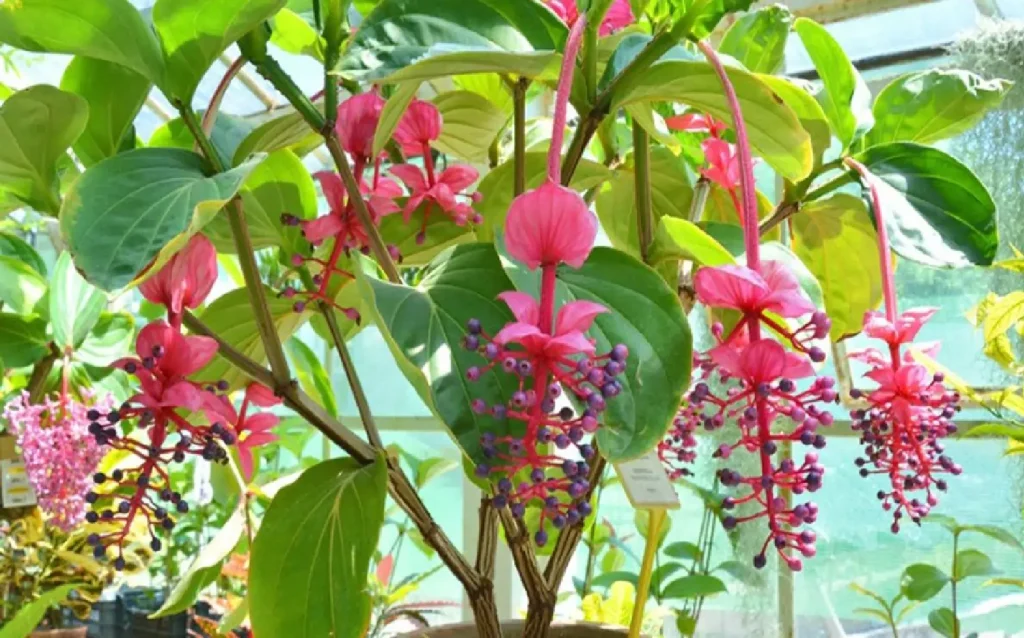
15. Medinilla magnifica
The full name of this plant is Medinilla magnifica. Its lovely drooping pink flowers and glossy patterns make this plant quite different from other plants. If you want a plant in your house that will grab the attention of guests as soon as they enter, then this plant is the best.
Medinilla Plant Care Tips
Where should it be kept: It’s best to place the medinilla indoors in a location that receives good natural light throughout the day, but doesn’t expose the plant to intense sunlight.
How should water be given: When watering Medinilla, check the soil before watering. It is safer to water when the top soil feels slightly dry.
What should be the soil for Medinilla
You can mix 40% high-quality potting soil, 30% cocopeat, 20% orchid bark, and 10% organic compost into the soil for this plant. Cocopeat controls moisture, orchid bark keeps the soil loose, and compost provides gradual nutrition, allowing the plant to grow without stress.
Fertilizer: Medinilla doesn’t need chemical fertilizer; it thrives on slow, natural feeding. A monthly application of seaweed liquid fertilizer or a very light vermicompost tea is sufficient during the growing season. also avoid in winter.
Choosing the Right Pots Indoor Flowering Plants (Very Important)
Indoor flowering plants are especially sensitive, as their entire life depends on a small pot. If the pot isn’t right, whether it’s a Peace Lily or an Orchid, flowering becomes difficult. The wrong pot can cause water retention, preventing the roots from breathing, and the plant gradually weakens.
Best Pots for Indoor Flowering Plants
Terracotta Pots (Safest Option): Terracotta pots are breathable. They drain excess moisture, making them perfect for plants like Peace Lily, Anthurium, and Begonia. Beginners planting their first flower plant should plant them in terracotta pots.
Ceramic Pots: Ceramic pots look beautiful, but just remember one rule—they must have drainage holes at the bottom. A ceramic pot without holes is risky for flowering plants.
Plastic Pots: Plastic pots hold moisture longer. They can work for plants like African Violet and Episcia, but you just need to be a little more careful with watering.
Note: Avoid decorative pots that don’t have drainage holes. Such pots are the biggest silent killers of indoor flowering plants.
Indoor Flower Comparison Table
Now I am giving you a table in which I have compared the flowers and told them. This table will be very helpful for beginner plant lovers.
| Indoor Flower Plant | Light Requirement | Difficulty | Best For |
|---|---|---|---|
| Peace Lily | Low–Medium, Indirect | Easy | Apartments, low-light rooms |
| Anthurium | Bright, Indirect | Medium | Living room decor |
| African Violet | Bright, Indirect | Easy | Tables, shelves |
| Phalaenopsis Orchid | Bright, Indirect | Medium | Premium indoor look |
| Begonia | Medium, Indirect | Easy | Bedroom, living area |
| Kalanchoe | Bright light | Easy | Sunny windows |
| Bromeliad | Bright, Indirect | Easy | Modern decor |
| Christmas Cactus | Indirect light | Easy | Winter flowering |
| Lipstick Plant | Bright, Indirect | Medium | Hanging baskets |
| Oxalis | Bright, Indirect | Easy | Table decor |
| Streptocarpus | Indirect light | Easy | Continuous blooms |
| Gloxinia | Bright, Indirect | Medium | Large flowers |
| Episcia | Medium, Indirect | Easy | Low pots, shelves |
| Hoya | Bright, Indirect | Easy | Hanging vines |
| Columnea | Bright, Indirect | Medium | Hanging decor |
| Medinilla | Bright, Indirect | Medium–Hard | Luxury interiors |
Conclusion
Growing flowers indoors isn’t difficult; it just requires choosing the right plants and understanding their basic needs. All of the indoor flowering plants mentioned in this post are practical, reliable, and suitable for beginners in apartments and indoor homes.
If you’re just starting out, start with 1-2 of these easy indoor flowering plants and gradually expand your collection. In no time, your home will be transformed into a natural, colorful, and stress-free space.
FAQ
Q1. Can flowers grow indoors without direct sunlight?
Yes, many indoor flowering plants like Peace Lily, Anthurium, African Violet and Streptocarpus can grow and bloom well even without direct sunlight.
Q2. What is the most common mistake with indoor flowering plants?
The biggest mistake is overwatering.
Q3. Is it necessary to fertilize indoor flowers?
Not Compulsory
Q4. Is it safe to keep indoor flowers in the bedroom?
Yes, most indoor flowering plants are safe for the bedroom.
Q5. Can we keep different indoor flowering plants in the same house?
Absolutely

My name is Jugraj Singh, the founder and author of Evergreenguides. I share practical tips and real-life insights on indoor and outdoor gardening, plant care, and improving home air quality, helping readers create greener and healthier living spaces.