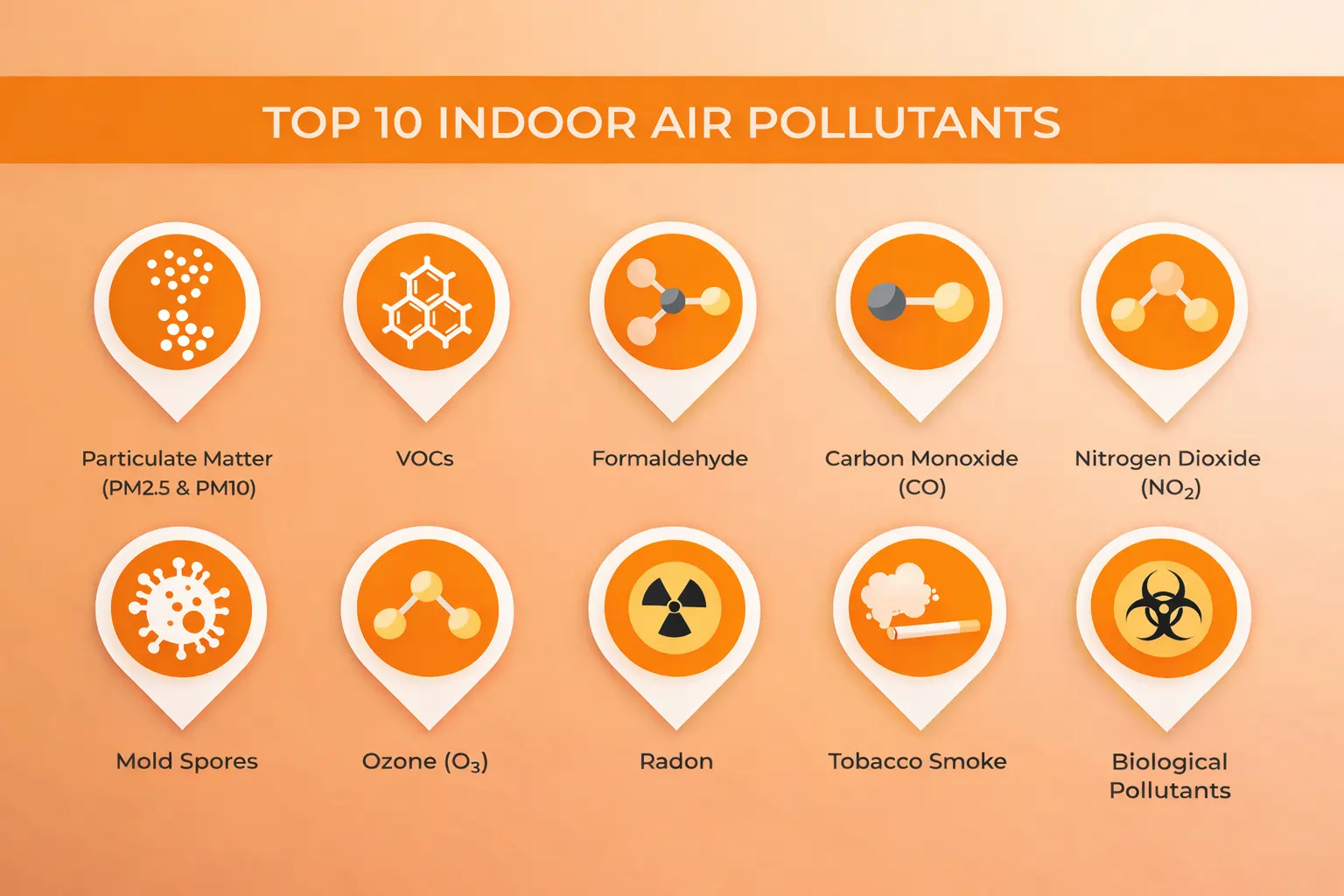
Indoor air pollution is a serious but often overlooked problem. according to some studies, indoor air can often be 2 to 5 times more polluted than outdoor air, but we don’t pay attention, but after Covid 19, everyone has become cautious about cleanliness and air quality around them. People often ask which material is a common cause of indoor air pollution. The simple answer is that materials that release harmful gases, chemicals or fine particles into the air are indoor air pollutants. This includes smoke from building materials (such as plywood and furniture), household products (such as paint, cleaners, air fresheners), and fuel combustion, which gradually pollute the indoor air and negatively impact health.
In this blog, we’ll explain in detail the most common indoor air pollutants that pollute the air in homes and offices. We’ll also explore how these materials can have harmful effects on human health, including respiratory problems, allergies, headaches, and, over time, serious illnesses. We’ll also explain how to identify and control these indoor air pollutants to keep your home air clean, safe, and healthy. This blog post is very important, so read to the end.
Which material is a common indoor air pollutant?
Let us now find out which materials in your home can spoil the air quality of the house.
1. Building Materials
Formaldehyde is a chemical that pollutes indoor air and is considered a common cause of indoor air pollution. This chemical is often released from pressed wood materials such as plywood, MDF, particle board, laminated furniture, and wall cabinets. When we use these materials indoors, formaldehyde is slowly released into the air. This can cause burning in the eyes, nose, and throat, headaches, and difficulty breathing. If exposed to this chemical for a long time, these can lead to serious illnesses, which is why pressed wood products are said to be a common source of indoor air pollution.
2. Paints, Varnishes & Solvents
Paints, varnishes, and solvents are a common source of indoor air pollution. When we paint walls, polish wood, or use glue to stick things together, these materials release harmful chemicals called VOCs (Volatile Organic Compounds) into the air. These chemicals pollute the indoor air. This can cause dizziness, vomiting, breathing problems, and asthma. This is why paints and solvents are said to be common indoor air polluting materials. Using low-VOC paints for the home is considered safer.
3. Household Cleaning Products
Household cleaning products such as bleach, phenyl, ammonia, toilet cleaners, and air fresheners are common causes of indoor air pollution. When we use these products while cleaning the house, they release strong and harmful gases that are released into the indoor air.
Example: Using toilet cleaner while cleaning the bathroom can cause eye irritation and breathing difficulties due to its odor. Similarly, spraying too much air freshener in the room can cause headaches and dizziness. Most dangerously, mixing bleach and ammonia can produce toxic gases that are extremely harmful to health. We often ignore these factors, which is why it’s said that household cleaning products are common indoor air pollutants and should always be used with caution.
4. Combustion Materials
Combustion materials refer to things that produce smoke and gas when burned. Indoor fuels such as LPG gas, kerosene, coal, wood, and incense sticks are common sources of indoor air pollution. When these fuels are burned in a stove, fireplace, or during puja, they release carbon monoxide (CO), nitrogen dioxide (NO₂), and very fine dust particles (PM2.5) into the air.
Example: If there is no proper ventilation in the kitchen while cooking on LPG gas, then the carbon monoxide released by burning the gas gets accumulated in the room, which can cause headache, dizziness and difficulty in breathing. Similarly, burning a kerosene stove or a wooden stove in a closed room fills it with smoke, which causes burning sensation in the eyes and damage to the lungs. Burning too many incense sticks also pollutes the air in the room. These should always be done with good ventilation.
5. Tobacco Smoke
Tobacco smoke is considered the most dangerous and common cause of indoor air pollution. When cigarettes, bidis, or hookahs are smoked indoors, the smoke emitted from them spreads into the room’s air. This smoke contains more than 7,000 harmful chemicals. It harms not only the smoker but also other people in the house (secondhand smoke).
There are many other reasons too but I have covered the most common reasons in this blog post.
How to Reduce Indoor Air Pollution
Reducing indoor air pollution is very important because clean air keeps us healthy. To reduce indoor air pollution, we should follow some simple and correct steps. First of all, low-VOC paints should be used in the house because normal paints release harmful gases which pollute the air. Secondly, there should be proper ventilation in the house, such as windows and exhaust fans, so that dirty air can go out and fresh air can come in.
Additionally, smoking indoors should be avoided altogether, as tobacco smoke is a common indoor air pollutant. Nowadays, air purifiers are also used to reduce indoor air pollution, and there are many good air purifier plants that, when kept indoors, purify the air by removing dust, smoke, and harmful particles from the air. Also, the humidity of the home should be kept under control, as excess humidity breeds mold and bacteria, which pollute indoor air. Finally, always choose eco-friendly and safe materials, such as natural cleaners and wooden products, to keep the indoor air clean and safe.
FAQs
Q 1. Which material is the most common indoor air pollutant?
Pressed wood products that release formaldehyde are the most common indoor air pollutant material.
Q 2. Is paint an indoor air pollutant?
Yes
Q 3. Can plants purify the air?
Yes, NASA has also said that air can be purified using air purifier plants.

My name is Jugraj Singh, the founder and author of Evergreenguides. I share practical tips and real-life insights on indoor and outdoor gardening, plant care, and improving home air quality, helping readers create greener and healthier living spaces.